Elementary School Special Needs Classroom Design & Accessibility Solutions
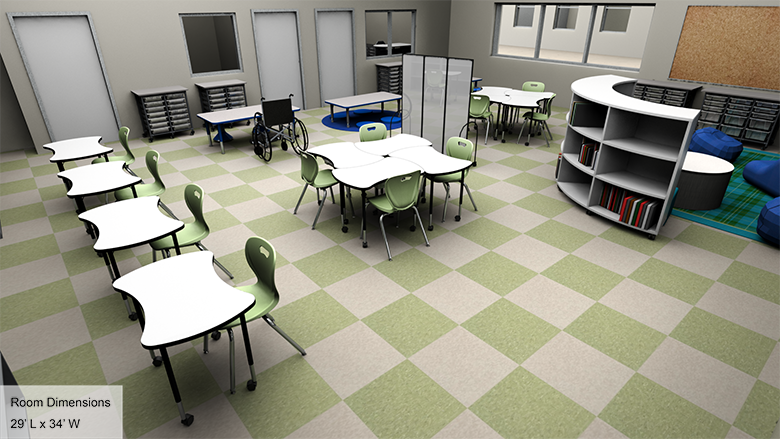
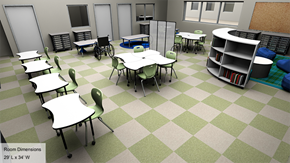
The special needs classroom for elementary school provides students with cognitive or physical disabilities everything they need to learn. Furnishings that accommodate students with disabilities make it simple for teachers to customize their lesson plans for individuals or small groups of students. Individual student desks allow students with special needs to work independently or in a one-on-one session with their teacher or an aid, while collaborative tables allow for small group projects, assignments or tutoring sessions. A variety of storage options allow students easy access to supplies and give teachers the ability to keep the classroom organized.
Requirements for a Great Special Needs Classroom
For Students
The special needs classroom should offer a comfortable environment where they can develop strong relationships with their teachers and peers. Furniture that allows for small group work and individualized mentoring assists special needs students in building on their individual strengths as well as socializing with peers and teachers.
For Teachers
The special needs classroom should feature furniture that's easy to arrange and rearrange according to their students' needs. Individual desks and collaborative spaces should be available for independent and small group work. There should be space between work areas, allowing teachers and aides to move between students as they work, or pull up a chair alongside a working student for individualized mentoring session.
For Administrators
The special needs classroom should be furnished in accordance with recommendations based on the needs of their special education students. Products must be readily available and delivered on time. Installation should be quick and efficient.
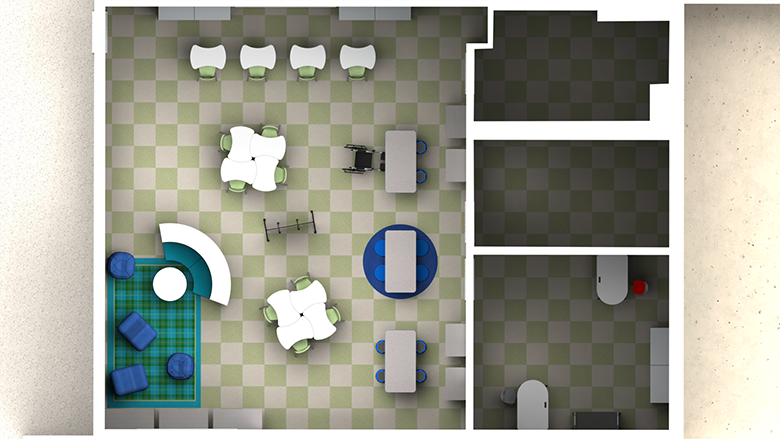
Special Needs Classroom Layout Areas
Individual Work Area
Gives students their own space to work independently or with a mentor:
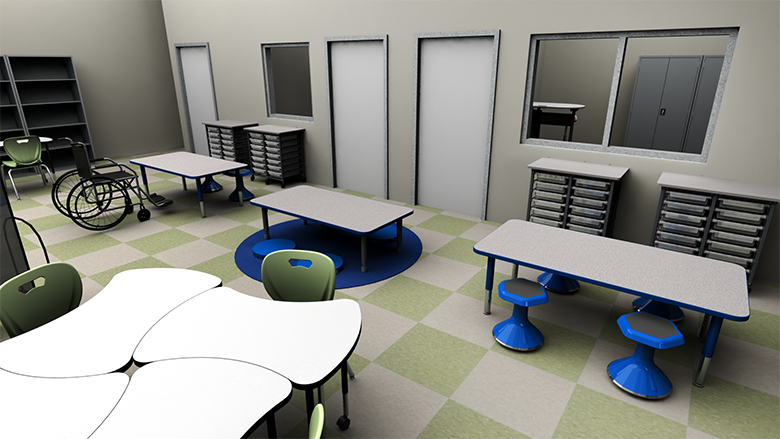
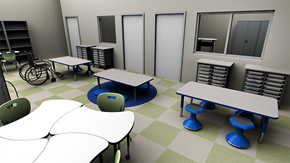
- Sit-to-stand individual student desks: Give students an area for independent assignments and one-on-one learning sessions with a resource teacher or aid. Sit-to-stand adjustability ensures students can work in whatever position is most comfortable.
- Sit-to-stand stools: Offer sturdy seating and a backless design that allows students to freely move and shift positions as they work. The adjustable-height design means these stools can be used alongside the sit-to-stand desks at any height.
- Group learning desks: Can be used individually or pushed together into groups for use during projects or collaborative activities. The desk shapes are designed to let all students see each other, giving everyone an equal opportunity to participate. Thick tabletops withstand heavy use, and laminate surfaces clean easily.
- Stack chairs: Made from durable, soft plastic flex with students as they lean back or change positions. The smooth, anti-static seats prevent annoying shocks, and a grip handle in the chair's back makes them easy pick them up and move around the room. A stackable design makes them easy to store out of the way when not in use.
- Mobile bin storage carts: Can be rolled directly to student work areas, making distributing and collecting supplies easy. Clear bins make it simple to locate needed materials, and they can be completely removed from the unit for use at workstations. Large and small bin sizes accommodate a variety of storage needs.
- Magnetic dry-erase room dividers: Can be easily rolled to workstations for use, and the top-to-bottom writing surface accommodates students in wheelchairs or with limited reach. They may also be used to section off workspaces if needed.
- Over-the-ear headphones: Help reduce ambient noise for students that need quiet in order to focus. These may also be used for audio listening assignments or blended learning lesson delivery.
Group Work Area
Designed to assist teachers and students in creating a space that accommodates small group projects or collaborative learning:
- Small collaborative tables: Can be used individually to seat two or three students for small group work or pushed together for larger mentoring sessions. Their small footprint allows students to easily interact during group work and a height-adjustable design accommodates students with limited reach.
- Stack chairs: Made from durable, soft plastic flex with students as they lean back or change positions. The smooth, anti-static seats prevent annoying shocks, and a grip handle in the chair's back makes them easy pick them up and move around the room. A stackable design makes them easy to store out of the way when not in use.
- Mobile teacher desk: Gives educators their own personal work surface that they can easily move around the room as needed, or even roll directly to the student or group they want to mentor. Storage pedestals beneath the tabletop hold personal belongings or classroom supplies.
- Mobile teacher's chair: Lets educators roll their chair to different group areas as they facilitate student activities.
- Wall-mount dry erase board: Provides a large writing surface that's great for communicating assignments or instructions. The magnetic surface lets teachers display papers, notes or student artwork.
- Wall-mount bulletin board: Provides a large surface where teachers can display reminders, notes, calendars and other papers that may need to remain posted for longer durations.
- Lockable storage cabinet: Secures materials that may require teacher supervision. Teachers may also opt to use this cabinet to secure their personal belongings.
- Open shelving: Provides a space for materials that need to remain in a consistent location, such as reference materials or workbooks. They may also be used for displaying students' projects or artwork.
Sensory and Literacy Area
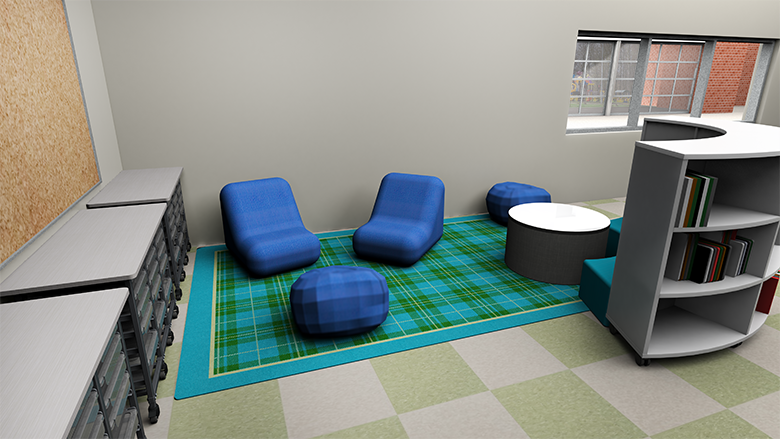
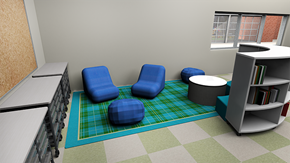
Provides students with a space where they can sit quietly with a book or play with manipulatives. This quiet section may also be used as a safe space for students that have difficulties with sensory overload:
- Classroom rug: Brightens up the area and acts as seating space for children who prefer to sit on the floor.
- Soft seating: Keeps children comfortable as they read, play or relax. A lightweight design makes these seating pieces easy to pick up and move around the area as needed.
- Bin shelving: Organizes classroom supplies and manipulatives. Bins can also be completely removed from the shelves for use in the sensory and literacy area or at student workstations.
- Book shelves: Keep reading material easily accessible, allowing children to quickly browse and choose a book.
Choosing Your Special Needs Classroom Solution
School Outfitters makes it simple to outfit your school's special needs classroom. Choose the option that best fits your budget and needs and get an itemized quote with just one click. Our helpful sales representatives are happy to answer questions about our classroom solutions and how you can put them to use in your school.
Call us at 1-800-260-2776 for personalized assistance.
Special Needs Classroom Frequently Asked Questions
What makes furniture effective for special needs elementary students?
Effective special needs furniture includes sit-to-stand desks that adjust for comfort and accessibility, height-adjustable collaborative tables for students with limited reach, and flexible seating options. Furniture should be easy to arrange and rearrange according to individual student needs while promoting both independent work and small group collaboration.
How should special needs classrooms be arranged for optimal support?
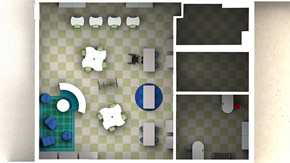
Classrooms should feature dedicated areas for individual work, group collaboration, and sensory/literacy activities. There should be space between work areas allowing teachers and aides to move between students easily or pull up a chair for individualized mentoring sessions. Furniture arrangements should accommodate wheelchairs and students with limited mobility.
What accessibility features are important in special needs classrooms?
Important features include magnetic dry-erase room dividers with top-to-bottom writing surfaces for wheelchair access, over-the-ear headphones to reduce ambient noise for focus, and furniture with adjustable heights to accommodate different physical needs. All furniture should be designed to support students with cognitive or physical disabilities.
How can sensory areas support special needs students?
Sensory and literacy areas provide quiet spaces for reading, playing with manipulatives, or serving as safe spaces for students with sensory overload difficulties. These areas should include soft seating, classroom rugs for floor activities, and organized storage for manipulatives and books that are easily accessible to students.