

Ready to speak with
a project expert?
a project expert?
Call 1-800-260-2776.
We're ready to listen!
We're ready to listen!


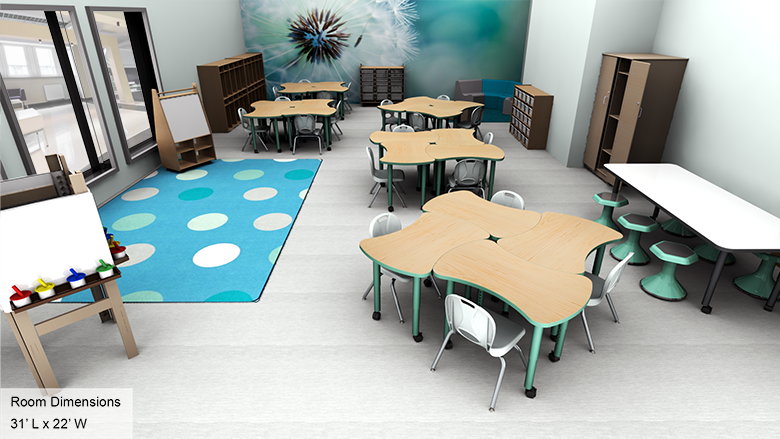
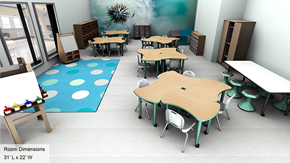
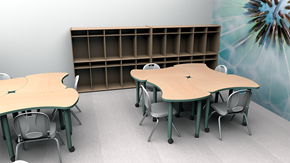
As students grow out of their early learning experiences and into elementary school, their classrooms need to grow with them. Low shelving lets kindergarteners easily reach items and supplies. Collaborative tables provide plenty of space for children to work individually or in groups and comfortable seating options help children maintain focus throughout the school day.
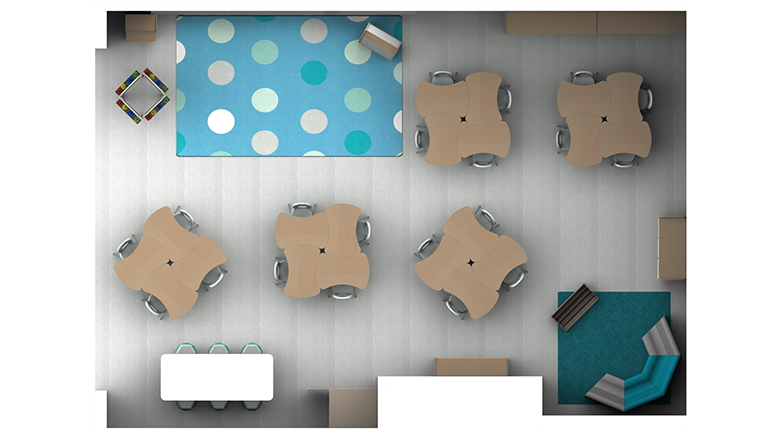
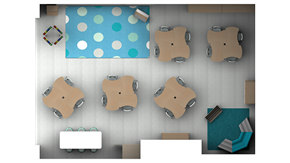
The kindergarten classroom should help prepare children for elementary school by offering students the opportunity to collaborate or work together in groups at various learning stations. Each station should feature a storage area to make it simple for early learners to find the toys, manipulatives or project supplies they prefer. Furnishings should be appropriately sized for early-learners, so they stay comfortable throughout the day.
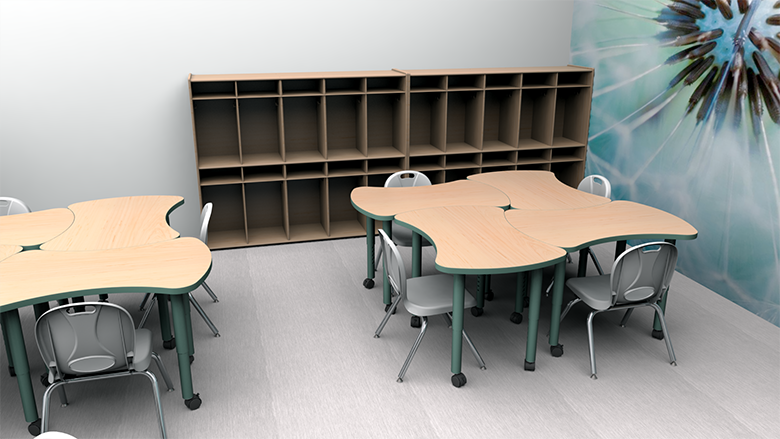
The kindergarten classroom should feature furnishings with a low profile, to ensure all children can be seen at all times, no matter where they are in the room. Teachers should be able to easily move between stations as they observe children or oversee lessons and activities. Shelving, carts and locking storage units keep classroom materials organized and out of reach.
The kindergarten classroom will be furnished with items that help achieve the vision for that space. They need to know that all products are available at the time they are needed and that their order will arrive correctly and on time. Installations must be quick and efficient.
Makes it easy for students to arrange themselves in ways that help them to interact with each other during group projects and activities:
Comprised of a variety of stations where students can participate in activities or games that focus on subjects such as reading, STEM and art:
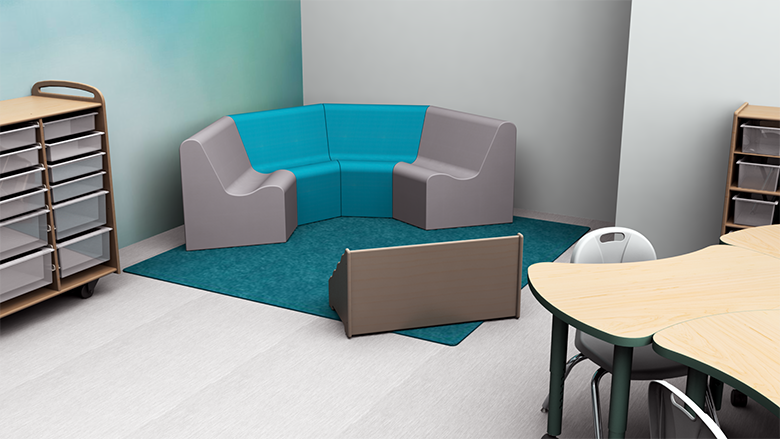
Acts as a meeting place for full class activities or teacher-led lessons:
Ensures that classroom supplies and student belongings stay organized and easy to find:
School Outfitters makes it simple to outfit a classroom tailored specifically for kindergarten. Choose the option that best fits your budget and needs, and with just one click, you get an itemized quote for this classroom, including all three specially-designed stations. Our helpful representatives are happy to answer questions about our stations and how you can put them to use in your kindergarten classroom.
Call us at 1-800-260-2776 for personalized assistance.
Kindergarten classrooms should help prepare children for elementary school by offering opportunities to collaborate and work together in groups at various learning stations. Each station should feature storage areas to make it simple for early learners to find toys, manipulatives, or project supplies. Furnishings should be appropriately sized for early-learners while maintaining comfort throughout the day.
Essential kindergarten stations include reading stations with bookstands and soft seating, STEM stations with hands-on project tables, and art stations with easels and supply storage. Each station should focus on different subjects while encouraging collaborative learning and preparing students for elementary school structure.
Low-profile furniture ensures all children can be seen at all times, no matter where they are in the room. This constant supervision is crucial for kindergarten safety while allowing teachers to easily move between stations to observe children and oversee lessons and activities.
Collaborative tables can be used individually for small group work or arranged in pods to accommodate larger projects. They help children learn to work together and interact with each other during group projects and activities, which is essential preparation for elementary school collaboration.