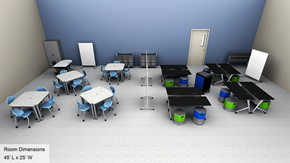
Flipped Learning Classroom

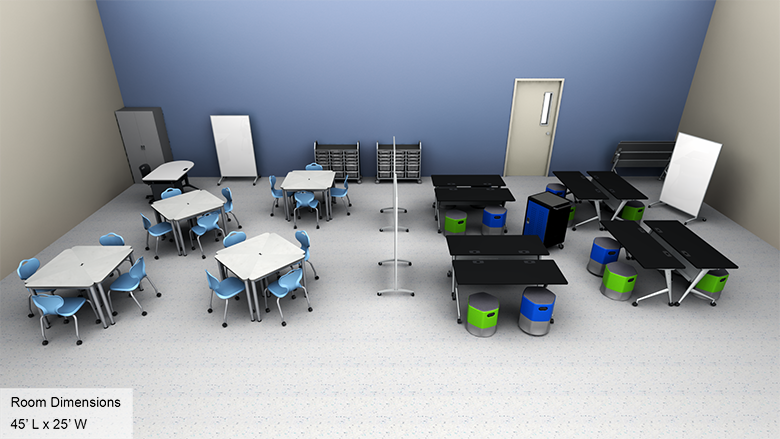
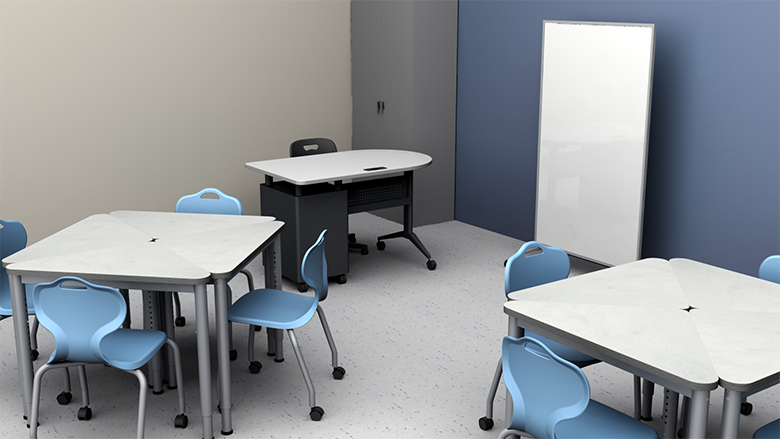
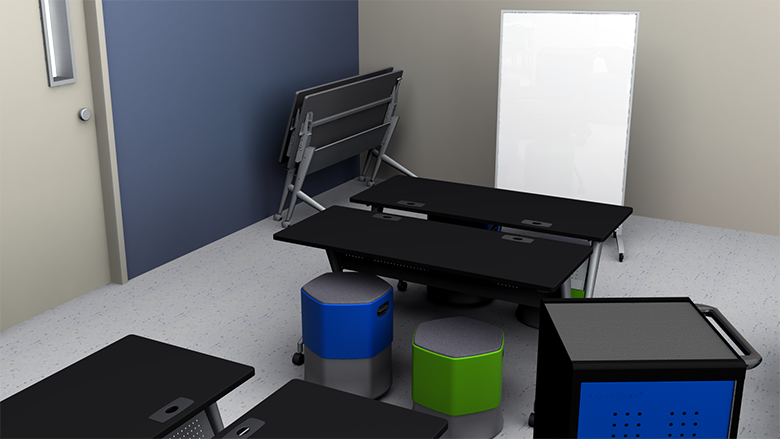
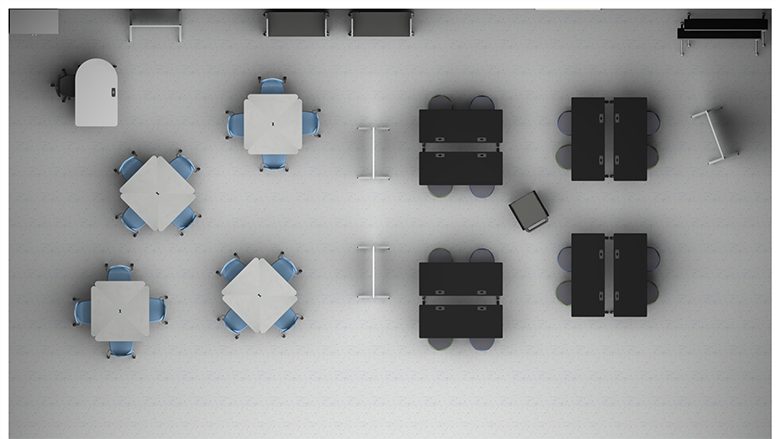
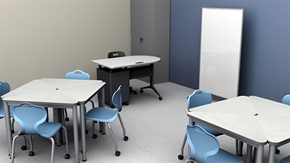
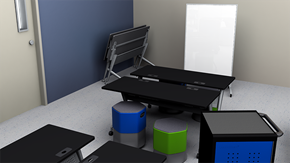
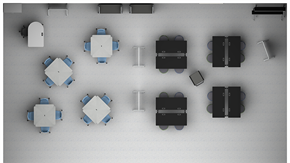
Flipped Learning Classroom - Overall View Flipped Learning Classroom - Alt View 1 Flipped Learning Classroom - Alt View 2 Flipped Learning Classroom - Plan View
Loading...

The Need for Flipped Learning

Flipped learning turns the traditional educational approach on its head, with teachers using class time to review content that students learn outside of class. Flipped classrooms should be comprised of several areas to help teachers mentor students. A dedicated area for online instruction allows students to brush up on study material or use applications that reinforce lesson content. A teacher-led instruction area gives students the chance to ask questions or offer thoughts that they might not be able to express in student groups. A collaborative area allows students to arrange themselves in smaller groups for discussion or to work on projects.

Requirements for a Great Flipped Learning Classroom

For Students

The best flipped classroom includes a technology center where students can access the internet on devices. Tables should include a wire management system like grommet holes and headphones should be readily available. Ergonomic seating keeps students comfortable as they work. Lightweight or mobile collaborative tables should be used to accommodate group work.

For Teachers

An area dedicated to teacher-led discussion is essential for presenting lesson material or instructions. There should be spacious walkways that allow the teacher to move freely between students working on devices or in groups, and an easy-to-use storage system to make distributing and collecting supplies quick and easy.

For Administrators

The flipped learning space should be comprised of products selected with the specific needs of their school in mind. All products must be available at the time they are needed. The delivery must arrive on time and installation should be quick and efficient.

Flipped Learning Solutions from School Outfitters

Individual Mastery Area

Designed with independent work or study in mind, this area includes:

  • Collaborative desks: Can be used individually for quiet study or easily arranged into groups for projects or discussions. Laminate tabletops wipe clean and look great for years.
  • Mobile school chairs: Constructed from durable, reinforced plastic. Smooth, anti-static seats with rolling casters make them easy to move and snag-free.
  • Mobile whiteboards: Roll anywhere for presentations or brainstorming. Spacious surfaces can also be used to section off workspaces.
  • Mobile teacher workstation: Provides a personal work surface with rolling casters and storage pedestals for supplies.
  • Teacher chair: Keeps educators comfortable while mentoring or grading assignments.

Technology Area

Designed to help students participate in online coursework or research. Includes:

  • Computer tables: Spacious surfaces with grommet holes for wire management.
  • Stools: Encourage freedom of movement, promote posture, and strengthen core muscles.
  • Charging cart: Keeps devices charged and secure with locking doors and heavy-duty casters. Top doubles as an additional surface.

Storage Area

Allows efficient collection and distribution of supplies so students remain focused. Includes:

  • Lockable teacher's cabinet: Secures devices, materials, and personal belongings. Reduces distractions by keeping supplies out of sight.
  • Mobile bin storage carts: Roll directly to collaboration stations. Clear bins make it easy to locate materials and accommodate various sizes.

Choosing your Flipped Learning Classroom Solutions

School Outfitters makes it simple to outfit your space for flipped learning. Choose the option that best fits your budget and needs and get an itemized quote with just one click, including all three of our specially-designed solutions. Our helpful sales representatives are happy to answer any questions about our bundles and how you can put them to use in your project-based learning classroom. Just give us a call 1-800-260-2776.

FAQ

What is a flipped learning classroom?
Flipped learning turns the traditional approach around, using classroom time for projects and collaboration while instruction happens outside of class.
What areas should a flipped classroom include?
At minimum: an online instruction area, a teacher-led instruction space, and collaborative student zones.
What furniture supports flipped learning?
Collaborative desks, mobile chairs, whiteboards, computer tables, charging carts, and flexible storage all help create effective flipped classrooms.
How can technology be managed?
Charging carts and computer tables keep devices powered, organized, and ready for daily use.
We're here to help. Contact us.
Call
Ready to speak with
a project expert?
Call 1-800-260-2776.
We're ready to listen!
Chat
No time for a
phone call?
Chat with a (real)
project specialist.
Read More
Want to learn more
about this space?
Check out our helpful
room guide.
loading...
Sign up to receive offers & updates
Accepted payment types
Shop with confidence
Better Business Bureau®
Loading...