
Ready to speak with
a project expert?
a project expert?
Call 1-800-260-2776.
We're ready to listen!
We're ready to listen!


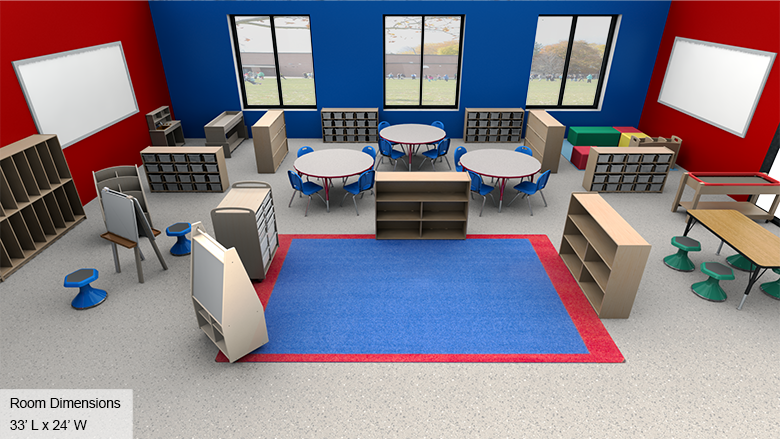
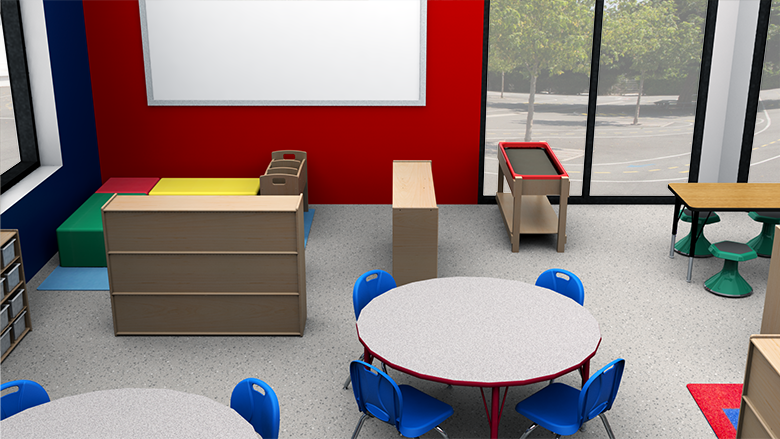
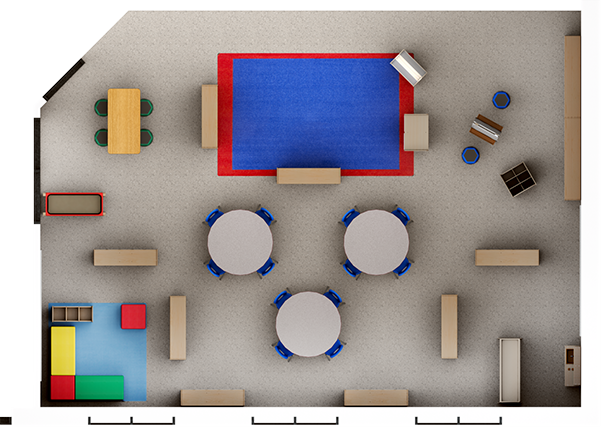
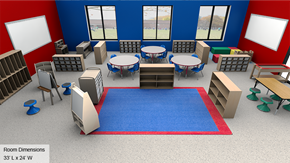
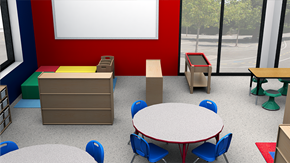
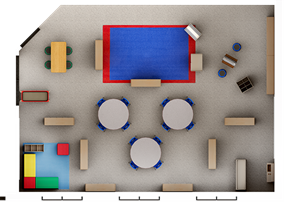
The hub and spoke classroom features a central gathering place that draws students together for circle-time activities. Learning stations radiate out from the central gathering place, so children can engage in activities that spark their enthusiasm. Low shelving units allow teachers and aides to see all children wherever they are in the room. Individual tables give children the space they need to work with manipulatives and materials.
The hub and spoke classroom should incorporate a large, central hub with a cozy atmosphere where they can gather for full class activities. Learning stations should be easily accessible from the central hub and feature storage areas so toys, manipulatives and other items are easy to locate as needed.
The hub and spoke classroom should maximize the ability to move between the central gathering area and various learning stations to offer guidance to student activity groups. Mobile writing surfaces give teachers a place to write notes or display a storybook to the whole class or to a small group. Furniture should feature a low profile, so teachers can easily observe all students in the room.
The hub and spoke classroom should be furnished with items that help achieve the vision for that space. They need to know that all products are available at the time they are needed and that their order will arrive correctly and on time. Installations must be quick and efficient.
Acts as a central meeting place and focal point of the classroom:
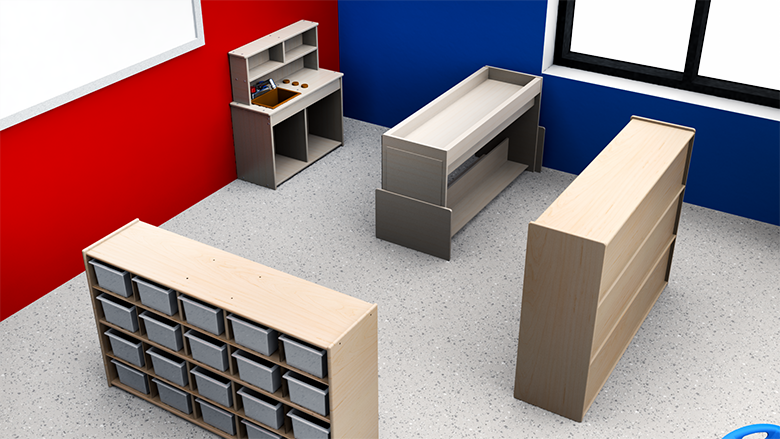
Comprised of a variety of stations where students can participate in activities or games that focus on subjects ranging from reading and science to imaginative play:
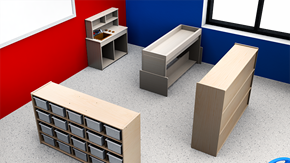
Keeps classroom supplies organized and easy to find. Storage units should feature a low profile, so teachers can observe all areas of the room. They may also be used to create dividers between each learning station:
School Outfitters makes it simple to outfit a classroom tailored specifically for a hub and spoke layout. Choose the option that best fits your budget and needs and get an itemized quote with just one click, including all three specially-designed stations. Our helpful representatives are happy to answer questions about our stations and how you can put them to use in your early learning classroom.
Call us at 1-800-260-2776 for personalized assistance.
The hub and spoke classroom features a central gathering place that draws students together for circle-time activities. Learning stations radiate out from the central gathering place, so children can engage in activities that spark their enthusiasm. This layout maximizes teacher supervision while providing diverse learning opportunities.
Low shelving units allow teachers and aides to see all children wherever they are in the room. This constant visual supervision is crucial for early learning environments while still allowing children to access materials independently and engage in station-based activities.
Effective learning stations include art stations for creativity, reading stations for literacy development, science stations for hands-on STEM exploration, imaginative play stations for social development, and collaboration stations for group projects. Each station should be easily accessible from the central hub.
The central gathering area acts as a focal point for full-class activities like circle time, story reading, and group discussions. A comfortable rug provides seating space while a magnetic easel allows teachers to display storybooks or student work, creating a cozy atmosphere for shared learning experiences.