
Ready to speak with
a project expert?
a project expert?
Call 1-800-260-2776.
We're ready to listen!
We're ready to listen!


With the 21st century seeing an ever-increasing need for teamwork, collaboration, and technology expertise, children can begin to develop and refine these skills as early as preschool. When young children work in groups to complete an activity or brainstorm new ideas, they are learning how to be an active listener, how to communicate, and how to compromiseâ€"important skills they can apply to real-world situations throughout their lifetimes.
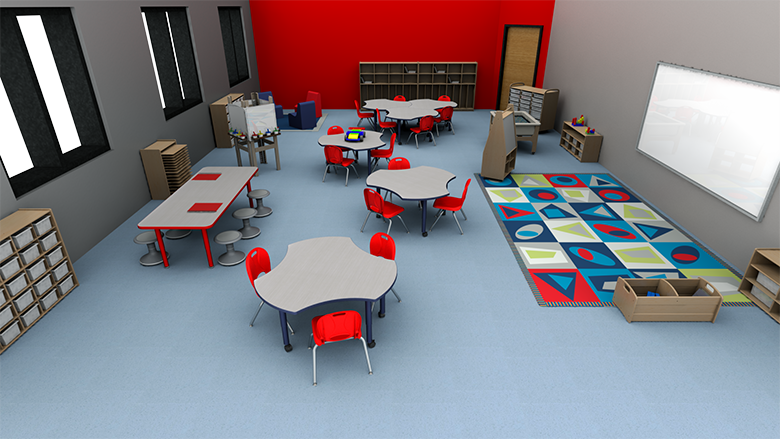
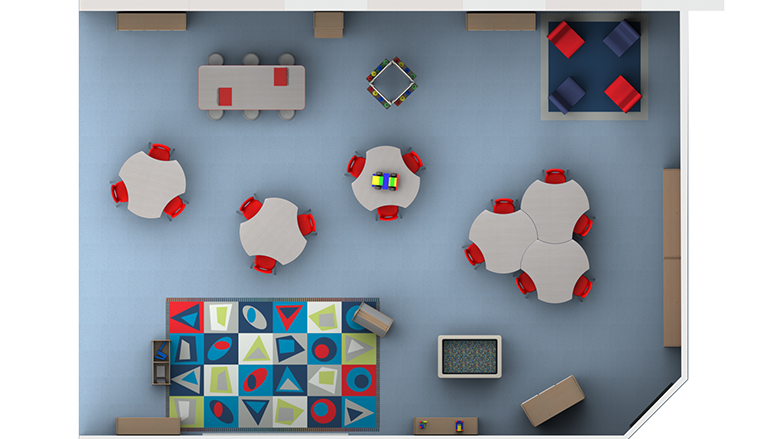
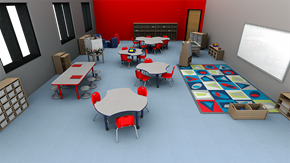
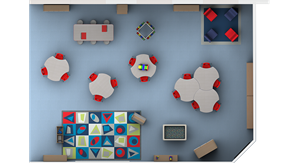
A great collaboration classroom should offer children space for individual work as well as the ability to work in groups for projects and brainstorming. Students should be able to clearly see everyone in their group so it's easy to communicate and make eye contact. Open walkways allow children to move between groups and access supplies as needed. Lightweight seating makes it simple for early learners to pick up and move their seating without assistance.
The collaboration classroom should maximize the ability to move among different groups to offer guidance and assistance or to facilitate communication. Teachers should be able to address the whole class as they call out instructions or provide demonstrations. All furniture should feature a low-profile, so teachers can observe all students at all times, no matter where they are in the room.
The collaboration classroom will be arranged and furnished to achieve the vision for that space. They need to know that all products are available at the time they are needed and that their order will arrive correctly and on time. Installations must be quick and efficient.
Makes collaborative projects, games, and activities easy to accomplish:
Functions as a hub for full-class, teacher-led activities:
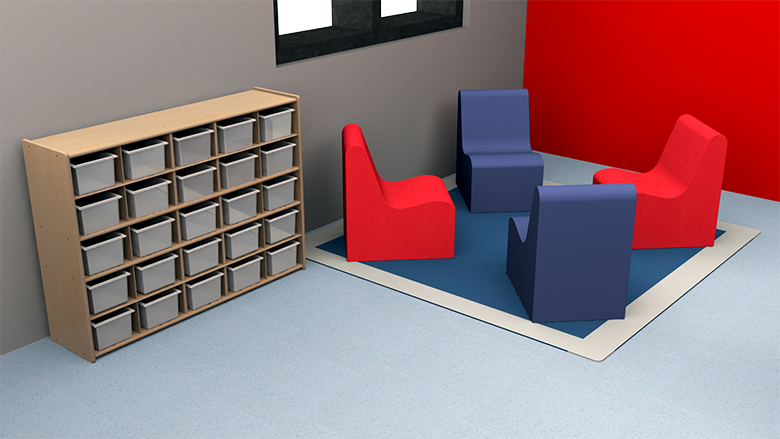
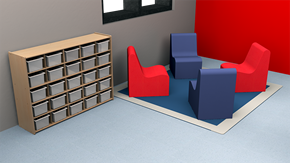
Adds a dedicated space for impromptu, small group activities or mentoring sessions:
Keeps classroom supplies organized and easy to find. Storage units should feature a low profile, so teachers can observe all areas of the room. They may also be used to create dividers between each learning station:
School Outfitters makes it simple to outfit a classroom tailored specifically for a collaborative preschool environment. Choose the option that best fits your budget and needs, and with just one click, you get an itemized quote for this classroom, including all specially-designed stations. Our helpful representatives are happy to answer questions about our stations and how you can put them to use in your collaborative learning classroom.
Call us at 1-800-260-2776 for personalized assistance.
Collaboration helps young children develop essential 21st-century skills including teamwork, communication, and compromise. When children work in groups to complete activities or brainstorm ideas, they learn to be active listeners, communicate effectively, and negotiate - important skills they can apply throughout their lifetimes.
Effective collaborative tables can be used alone for small group activities or easily pushed together for larger groups. They should be designed to ensure all group members can see each other for better communication. Tables should be appropriately sized for young children with lightweight construction for easy reconfiguration.
All furniture should feature low-profile design so teachers can observe all students at all times, no matter where they are in the room. Open walkways allow children to move between groups and access supplies as needed. Teachers should be able to easily move among different groups to offer guidance and address the whole class when needed.
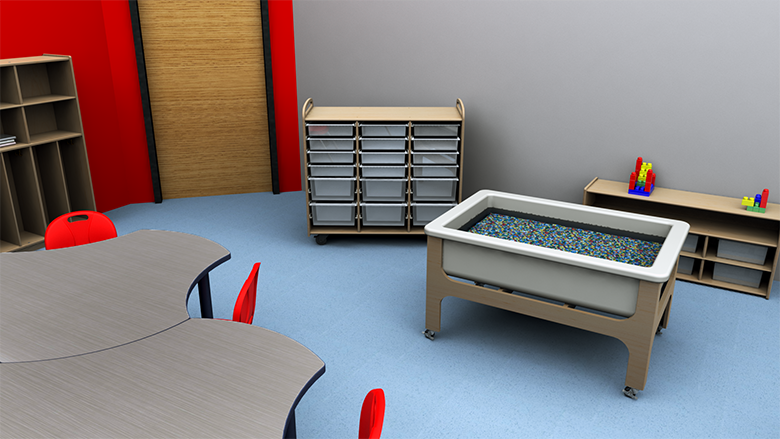
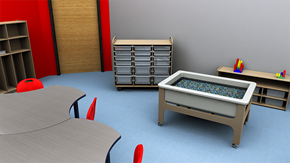
Sensory tables let children experiment with sand, water, or manipulatives to develop fine motor skills and sensory awareness. Art areas with easels, supplies, and dedicated tables provide opportunities for creative expression. These hands-on experiences support multiple learning styles and developmental milestones.