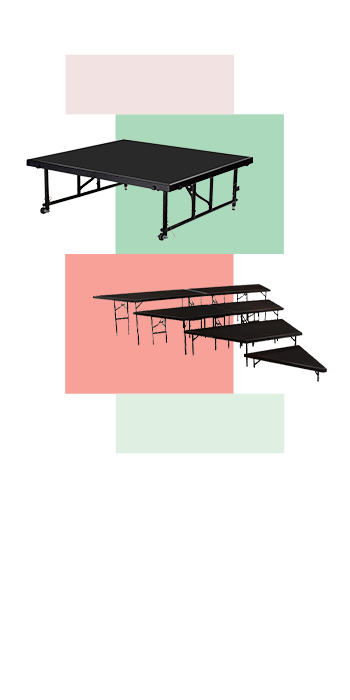
Start with what students will do on the platform. A portable stage offers a flat surface for assemblies, plays, graduations, and other events where performers or speakers move across the space. Seated risers have deep tiers with room for chairs and instruments, which makes them a practical choice for band concerts. Standing risers use shallower tiers so choir members can stand at different heights and remain visible. If your school hosts several types of events, modular sections can give you more layout options. Straight risers work well for simple rows, while tapered sections can form a curved setup.
Measure the floor area and ceiling height before you choose a setup. Allow space for performers, steps, backstage access, and clear doorways. In a larger room, a taller stage can help the audience see, but check headroom and choose a height that suits the age of your students. For a choir, plan enough tiers for the number of singers. Steps and compatible guardrails help students enter, exit, and use elevated platforms safely.
Deck construction and surface affect cost and day-to-day use. Plywood decks are durable and often more affordable; aluminum decks weigh less and resist rust but typically cost more. Hardboard provides an economical surface. Carpet adds a finished look and absorbs some sound. Polypropylene offers a nonslip surface that is easy to clean and resists water, though water resistance does not mean the platform is waterproof.
Choose a wheeled model or caddy if staff move the platform between rooms. Check the stored dimensions, too, so it fits through doorways and in your storage space.
Check the product specifications before you use a platform outdoors. If the model permits outdoor use, move it inside before bad weather and follow the manufacturer’s care instructions.
Add compatible skirting for a finished look and to conceal the legs beneath the platform. Confirm the skirt fits your platform’s height and dimensions before you order.
Keep up to date.
Join the School Outfitters mailing list and be the first to know about new products and promotions.

Standard Stage and Riser Configurations
Most stages and risers are modular and so can be combined to create larger performance spaces, backstage areas and room for stage steps.
Standard Stage |
Standard Riser |
Y-Shaped |
Curved |
Product Types
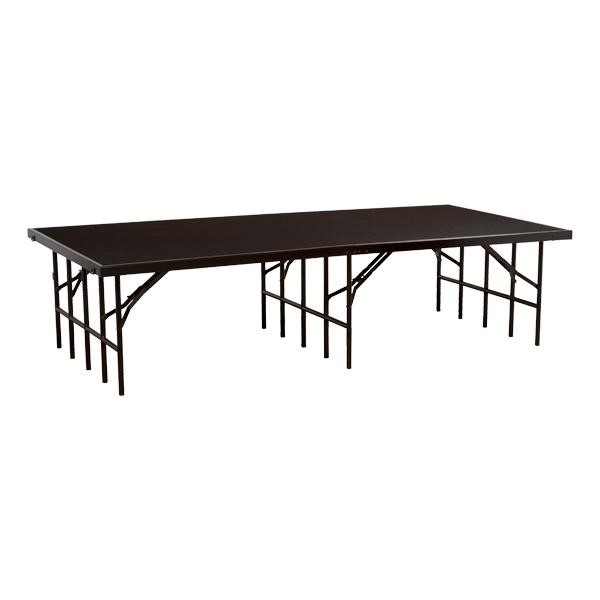
This style of portable stage platform features a fixed-height base. Single-height stages are typically more affordable than adjustable-height stages, but offer less flexibility. These sturdy stages are ideal if you want a platform for one specific type of show.
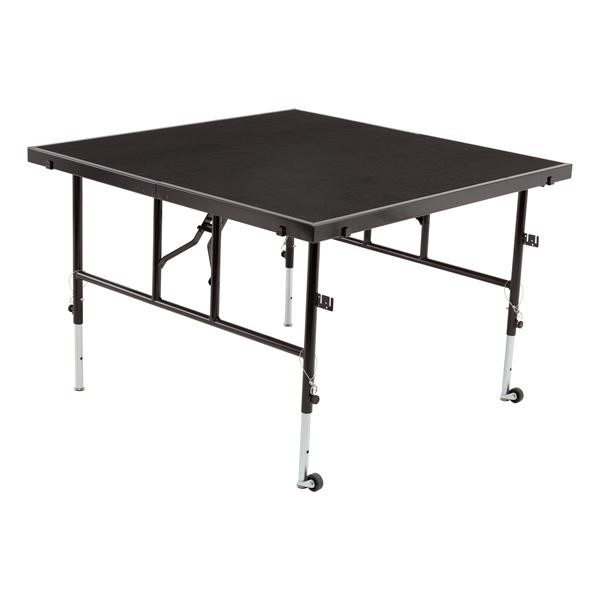
Dual-height stages are just as strong as fixed-height stages, but feature adjustable-height bases. These platforms are perfect for schools that need a stage versatile enough to handle multiple age groups and different types of events.
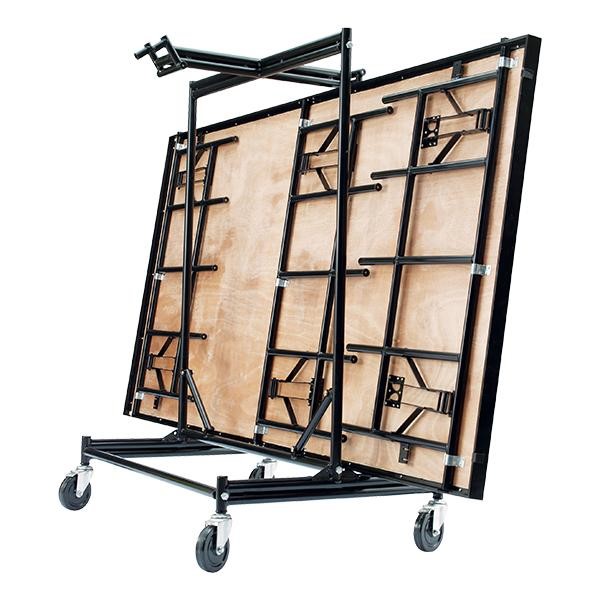
If you plan on frequently moving your performance area, a portable stage on wheels is the right choice. These options feature strong, smooth rolling casters that allow folded stages and risers to simply be pushed wherever they need to go. Schools that utilize both indoor and paved outdoor performance spaces would do especially well with mobile stages and risers.
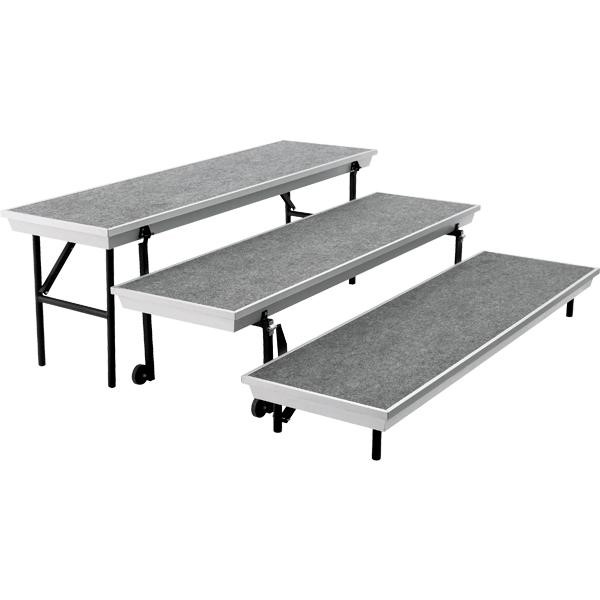
Straight risers are the standard style of tiered stages and work well as stand-alone units or paired with other straight risers. Every platform on the stage is identical, regardless of height. They are an affordable option for simple layouts.
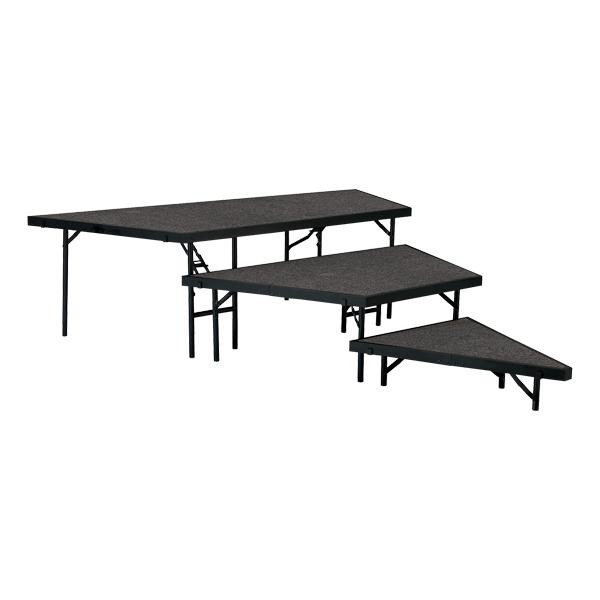
Tapered risers are designed to create curved stages. Featuring angled edges on platforms that increase in length with each level, these stages can easily be combined with other tapered risers to form semi-circular performance areas.
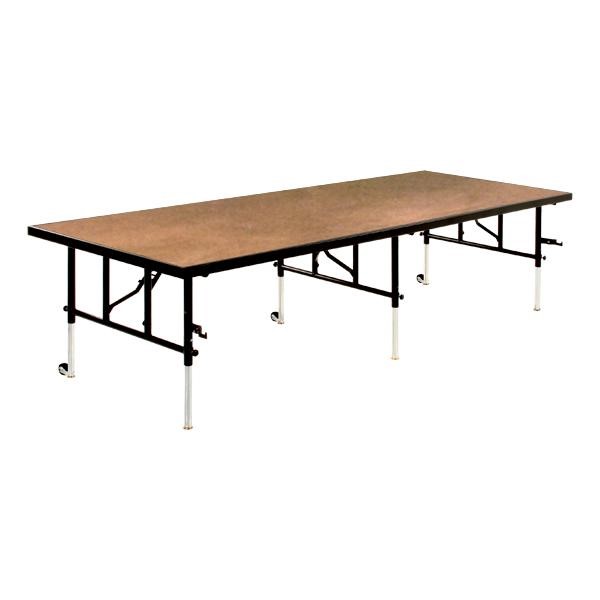
The most simple and affordable type of stage surface, hardboard decks are often built with strong and sturdy plywood. Although they are not designed to be left outside indefinitely, some hardwood decks have a top layer made of polypropylene, which is a durable and non-slip plastic material that is easy to clean and water resistant, making these portable stages a good option for outdoor events and performances.
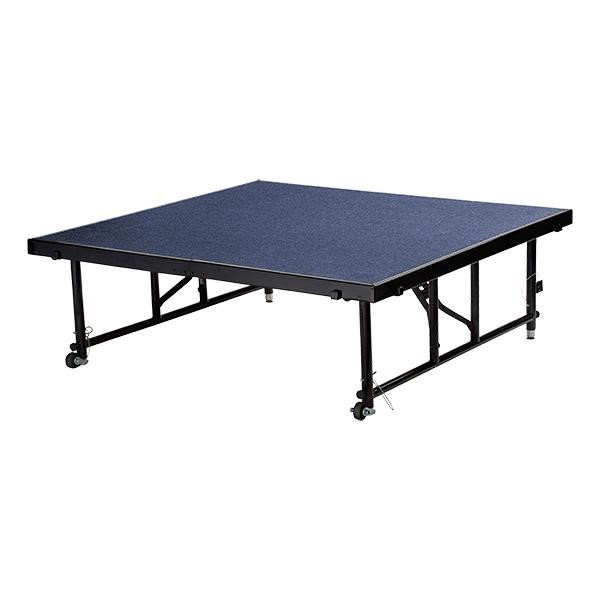
Carpeted deck stages are covered in short, commercial-grade carpet, available in a variety of colors. Though often more expensive than plain hardwood decks, carpeted decks give your stage a stylish look and provide much more sound absorption than non-carpeted decks.
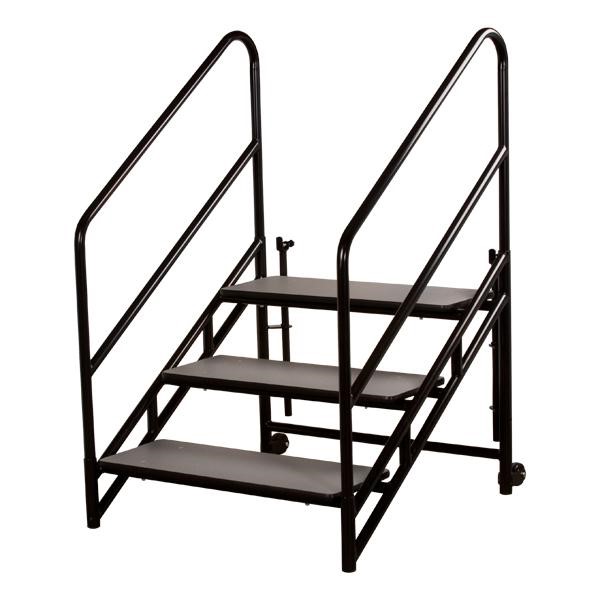
Steps and guardrails make it easy to quickly enter and exit the stage during school productions while maintaining safety. We advise using steps and guardrails for any stage taller than eight inches. Having one step for every eight inches of stage height keeps your students safe. Guardrails make sure that any missteps during performances don’t result in an injury. Attaching guardrails to the sides and back of a stage gives students a place to rebalance themselves if they slip or trip.
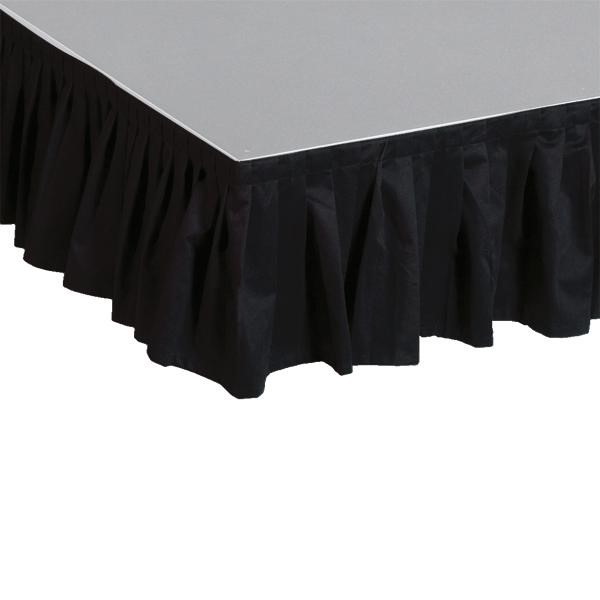
Simple and elegant fabric can be wrapped around stages to hide platform legs and any wires or other equipment being stored below the deck. Choose between relaxed shirred fabric or clean-cut pleated fabric for stage skirting that gives a finished look to your performance area.

Ready for the next step?
Talk to a School Outfitters furniture expert today and get assistance on everything from product selection and room designs to purchase compliance and delivery.
Related Resources
Blog post
How to Find the Best Desks for Your Flexible Classroom
Modern classrooms thrive on flexibility, switching between individual work and ...
Read Now
Blog post
How Flexible Classroom Seating Benefits Students
Learn three big benefits of flexible classroom seating and how different seating options ...
Read Now
Blog post
How to Choose the Best Classroom Chairs for Your School
Does your school district need new classroom chairs? Here’s how to choose the best chairs ...
Read Now