




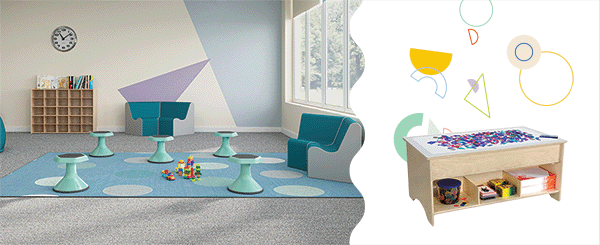
Walk into an early learning classroom, and you’ll notice something right away. Students aren’t just sitting still. They’re touching, stacking, bouncing, pouring, listening, and moving. It’s all part of how young children make sense of their world. For educators, creating the right environment means going beyond desks and shelves. It means weaving in sensory play equipment that transforms simple exploration into powerful learning.
The right school furniture and sensory tools invite children to explore with curiosity, while giving teachers practical ways to support development. And while sensory play might look like “just fun,” research shows it’s anything but. When students engage their senses, they’re literally building the brain connections that prepare them for lifelong learning.
Why sensory play equipment matters in early learning
Young children learn best when their bodies and minds are working together. According to the University of Connecticut’s UCONN KIDS program, sensory play strengthens neural pathways that support problem-solving, memory, and task completion. These aren’t abstract skills. These are the very foundations kids rely on to thrive in school.
In classrooms, therapy rooms, or even at home, sensory play encourages:
Fine and gross motor skills – pouring, scooping, climbing, balancing.
Early problem-solving – experimenting with textures, shapes, and cause-and-effect play.
Self-regulation and calming strategies – tools like weighted lap pads help students refocus.
Social interaction and teamwork – sharing sensory bins or collaborating on building challenges.
Adding classroom sensory equipment centers on giving children the tools to learn and thrive academically and socially.
The benefits of sensory play
Educators and researchers alike recognize that sensory play delivers wide-ranging benefits. For example:
Cognitive growth – Hands-on exploration sparks problem-solving and early STEM thinking. A GVSU study found young learners were 56% more engaged after regular sensory room sessions compared with traditional activities.
Language development – Kids practice descriptive words as they talk about “squishy,” “loud,” or “smooth.”
Emotional well-being – Sensory play offers calming outlets, reducing overstimulation that can lead to meltdowns.
Inclusivity – Equipment is especially important for children with autism or sensory processing needs, offering ways to participate alongside peers.
The National Association for the Education of Young Children (NAEYC) notes that early exposure to sensory experiences supports not only academic readiness but also social inclusion.
Pro Tip for Educators: Think of sensory play as scaffolding. Just as classroom furniture supports the body, sensory play supports the developing brain.
Essential sensory play equipment for early learning classrooms
Every classroom looks a little different, but there are certain tools that consistently support early learners. Here’s what belongs at the top of your sensory equipment list.
1. Sensory tables
Sensory tables are the heart of many early learning classrooms. These versatile tables can be filled with water, sand, rice, beads, or seasonal items like pinecones and leaves. With built-in bins, lids, and drainage options, they adapt easily to daily lessons.
Educators use sensory tables to:
Teach measurement, volume, and basic math concepts.
Encourage cooperative play and sharing.
Provide repetitive, calming motions like pouring or scooping.
When paired with sturdy classroom furniture, sensory tables become a reliable daily activity zone.
2. Sensory toys
From textured balls and squishy putty to fidget spinners and tactile blocks, sensory toys give kids tools to focus and self-regulate. These small items are often lifesavers during transitions or quiet work time.
They’re especially effective for students with ADHD, autism, or anxiety, but all children benefit from tactile outlets that release energy and promote concentration.
3. Gross motor sensory equipment
Sensory play isn’t limited to the tabletop. Gross motor equipment brings movement into the mix, helping children build balance, coordination, and strength.
Popular options include:
Balance beams
Stepping stones
Foam climbing shapes
These tools promote body awareness and confidence while turning movement into structured play. They also work beautifully alongside flexible school furniture that can be rearranged to create safe play zones.
4. Multi-sensory panels and walls
Mounted panels or portable walls filled with spinners, sliders, and textured surfaces bring multi-sensory engagement to any classroom corner. They’re excellent for quiet time, therapy rooms, or one-on-one teacher support.
Because they don’t take up floor space, they’re ideal for classrooms that need compact solutions without sacrificing engagement.
5. Calming spaces with sensory equipment
Every early learning environment needs a calming corner. These areas give students a chance to regulate their emotions before returning to group activities.
Essential calming space items include:
Soft seating like beanbags or small loungers
Weighted lap pads for grounding
Gentle lighting or fabric canopies
Think of calming corners as part of your school furniture plan. They’re just as necessary as tables and chairs.
Sensory learning activities to try
The real beauty of sensory classroom play is that it doesn’t require expensive or complicated setups. With a little creativity, everyday objects and classroom furniture can become tools for discovery. Below are more detailed sensory learning activities you can adapt to fit your space and your students’ needs.
1. Water play with a twist
Beyond cups and funnels, consider:
Floating and sinking experiments: Provide a basket of objects, with plastic animals, corks, and rocks, and let children test which float and which sink. This simple science activity promotes hypothesis-making and problem-solving.
Color mixing: Add just a few drops of food coloring to water bins and let students mix colors with pipettes or spoons. They’ll not only develop fine motor skills but also early understanding of cause and effect.
2. Sensory bins for storytelling
Fill colorful classroom bins with thematic items to pair with read-alouds. For example:
During a story about the beach, include sand, seashells, and toy crabs.
For farm stories, add dried corn kernels, toy animals, and miniature tractors.
Children retell the story through tactile exploration, reinforcing comprehension and language development.
3. Mess-free sensory bags
Seal hair gel, water beads, or paint inside clear plastic bags. Students can squish, trace letters, or draw shapes without the mess. Tape bags to tables or windows for added stability.
4. Sensory walking paths
Create a pathway with different textures, like bubble wrap, foam mats, artificial grass, and carpet squares. Let students walk barefoot or with socks to explore the sensations. This builds body awareness and gross motor coordination.
5. Musical sensory play
Sound is just as important as touch. Try:
Homemade shakers: Use sealed containers filled with rice, pasta, or bells.
Sound matching games: Hide pairs of identical shakers and challenge students to find the match by listening.
Drum circles: Offer a mix of drums, tambourines, or even upside-down classroom furniture (like sturdy buckets) for rhythm play.
6. Sensory art projects
Incorporate textures into everyday art activities:
Use sand, salt, or fabric scraps mixed into paint.
Offer finger paints, sponges, and textured rollers.
Create collages with rough, smooth, bumpy, or soft materials.
Students explore artistic expression while also learning sensory vocabulary.
7. Taste-safe sensory play
For toddlers or classrooms where mouthing is common, safe sensory activities matter:
Cooked pasta (colored with food dye) offers a squishy, slippery texture.
Cereal bins (like Cheerios or rice puffs) let children scoop, pour, and play safely.
Whipped cream or pudding finger painting provides a tactile, edible option.
8. Light and shadow play
Introduce sensory learning with visual stimulation:
Use flashlights, shadow puppets, or translucent classroom furniture like light tables.
Offer colored cellophane sheets for children to layer and explore how colors change.
Build shadow theaters where kids create shapes and stories.
9. Nature-inspired sensory stations
Bring the outdoors inside:
Create a “mini garden” station with soil, seeds, and small shovels.
Provide pinecones, sticks, and leaves for sorting and pattern making.
Rotate items seasonally, like fall leaves, winter pine boughs, and spring flowers, to connect sensory play with the natural world.
10. Role-play and dramatic play sensory activities
Pair sensory props with pretend play:
A pretend kitchen stocked with textured play food.
Doctor’s kits with bandages, cotton balls, and stethoscopes.
Construction zones with toy bricks, sand, or kinetic clay.
Sensory elements make role play more immersive and spark collaboration.
11. Classroom 'calm down’ jars
Fill clear bottles with glitter, water, and a few drops of glue. When shaken, the glitter swirls and slowly settles, providing a visual tool for self-regulation. Place them in your calming corner for students who need quiet time.
12. Sensory story mats
Lay out mats with textures, shapes, or raised lines. As teachers read stories, children trace the paths or shapes that match the narrative. This integrates literacy with tactile learning.
Choose the right sensory play equipment
Not all sensory tools are created equal. When shopping for your classroom or daycare, keep these criteria in mind:
Durability – Can it stand up to daily use and lots of little hands?
Flexibility – Can the same piece be used for multiple activities?
Accessibility – Does it include features that make it inclusive for all learners?
Storage – Are there lids, bins, or portability options for small spaces?
High-quality school furniture should tick all of these boxes, ensuring your investment lasts for years.
Browse right now: Shop sensory play equipment for classrooms and daycares
FAQs about sensory equipment in the classroom
How much sensory equipment does a classroom need?
There’s no one-size-fits-all rule, but most early learning experts recommend having at least one active station (like a sensory table), one calming space, and a selection of small sensory toys. The balance depends on your classroom size, student needs, and budget.
How do sensory tools fit into classroom furniture planning?
When selecting school furniture, consider how sensory tools integrate with daily classroom flow. Sensory tables, flexible seating, and storage units should be placed where children can access them easily without disrupting group instruction. Durability and safety are also top priorities, so look for pieces designed for daily classroom use.
Are sensory tools only for students with special needs?
Not at all. While sensory equipment is especially valuable for students with autism, ADHD, or sensory processing challenges, all children benefit from sensory play. It enhances creativity, problem-solving, and language development for every learner.
What’s the best way to introduce sensory play without overwhelming students?
Start small. Add a single sensory bin or table activity and gradually expand options. Offer clear rules, such as keeping materials in the bin and model how to use equipment. Rotating materials weekly keeps interest high while maintaining predictability.
Bring sensory play into your classroom with help from School Outfitters
Sensory play is an essential part of early childhood education. With the right mix of equipment, from sensory tables and toys to calming corners and gross motor tools, you can transform your classroom into a space where every child feels engaged, supported, and ready to explore.
At School Outfitters, we’ve helped thousands of educators find durable, classroom-ready sensory equipment that makes a real difference. Whether you’re outfitting a daycare, therapy room, or early learning center, our specialists can guide you to the best options.
Talk to one of our school furniture experts today or browse our curated selection of sensory play furniture and toys to start building a more engaging, supportive environment for your students.