




Schools across the country are rethinking what inclusion looks like outside the classroom. Flexible seating, collaborative layouts, and sensory-friendly spaces have transformed the way students learn indoors. But the playground? That's where many schools still have room to grow.
For students who use wheelchairs or have mobility challenges, recess can feel like the most isolating part of the day. Cecilia Perry, a fourth grader at East Brainerd Elementary in Chattanooga, Tennessee, spent two years watching her classmates swing and climb while she sat on the sidelines. When the school installed a wheelchair-accessible swing in late 2025, Cecilia's first words after riding it were, "Excited and happy." Her teacher added: "It gives kids access to something that other students just don't have to think about not being able to do."
That's what inclusive playground design is really about. Not checking a box. Giving every student a reason to show up to recess.
If your school is thinking about wheelchair swings or a broader push toward inclusive outdoor spaces, here's what to consider before you invest.
What does it mean to have an inclusive playground in 2026?
In 2026, inclusive playground design has moved well past compliance checklists. The leading thinking now frames inclusion as a design intent, not just a legal requirement. An inclusive playground is one where every child can play meaningfully, not just enter the area.
That shift matters because it changes how schools approach purchasing and planning decisions. Rather than adding a single accessible element and calling it done, more districts are thinking about the full play experience from the ground up.
Under the Americans with Disabilities Act (ADA) 2010 Standards for Accessible Design and U.S. Access Board guidelines, newly constructed or altered play areas are required to provide accessible routes, ground-level play components, and accessible surfacing. These are legal minimums. The schools leading the way in 2026 treat them as a starting point, not a finish line.
A 2021 scoping review published in Frontiers in Rehabilitation Sciences (Brown et al.) synthesized evidence from 35 peer-reviewed studies and identified 13 evidence-based recommendations for designing truly inclusive playgrounds. The research found that children with disabilities consistently experience barriers to independent play, and that thoughtful design, beyond the minimum, is what drives real inclusion
In practice, a truly inclusive school playground in 2026 includes:
Accessible pathways and surfaces. Firm, smooth surfaces with continuous pathways make it possible for students using wheelchairs or walkers to move through the space without hitting dead ends. Per ADA standards, ground-level accessible routes require a minimum clear width of 60 inches and surfaces that comply with ASTM F1951-99 for wheelchair accessibility. Rubber or synthetic turf surfacing also absorbs impact, benefiting all students.
Sensory variety. Tactile panels, musical elements, and sensory gardens give students who process the world differently a way to engage on their own terms. The Brown et al. review identified sensory-based play components as one of the strongest evidence-based recommendations for inclusive playground design.
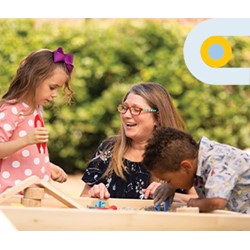
Side-by-side play. Equipment designed so students of different abilities can participate together, rather than in parallel. This is where wheelchair swings make a real difference.
Quiet and active zones. Not every student wants high-energy play all the time. Spaces designed for rest, regulation, and calmer activity support the full range of student needs, including those with autism or sensory sensitivities. ADA-accessible picnic tables are a clear example of inclusive and special needs furniture in action. These tables feature knee clearance minimums of 24 inches high, 30 inches wide, and 17 inches deep, along with clear floor space for wheelchair approach, making them purpose-built to include students who use mobility devices in shared outdoor activities.
Age-appropriate challenge. Inclusive doesn't mean easy. Good playground design gives every student the chance to stretch their abilities, with multiple routes and graduated difficulty rather than one-size-fits-all equipment.
User involvement in design. The Brown et al. review found that families of children with disabilities and representatives from disability organizations bring essential knowledge to the design process. Involving them leads to spaces that reflect actual student needs, not assumptions.
What is inclusive and special needs furniture?
Inclusive and special needs furniture refers to equipment and furnishings specifically designed to remove physical, sensory, and cognitive barriers, so that students of all abilities can participate fully in learning and play
On the playground, that includes:
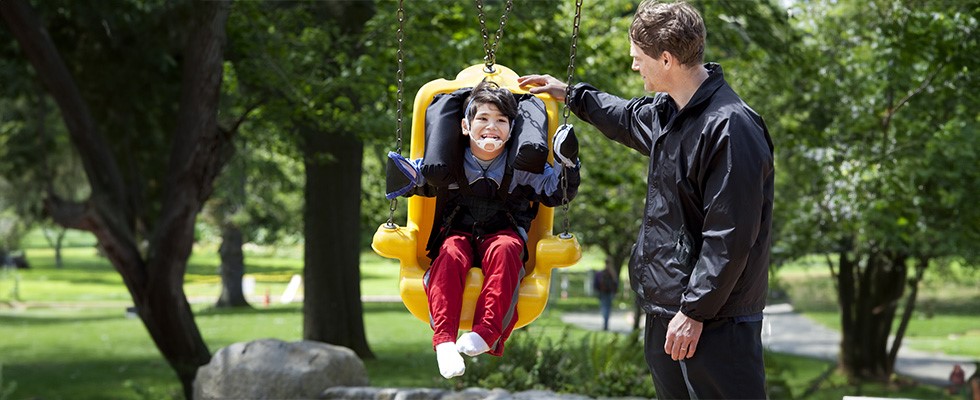
Wheelchair-accessible swings: Allow students to remain in their wheelchairs and swing alongside peers without transferring.
ADA-accessible picnic tables: Feature open-end designs, appropriate knee clearance, and surface heights that accommodate wheelchair users.
Sensory play panels: Provide tactile, visual, and auditory input for students with sensory processing differences.
Balance and vestibular equipment: Supports sensory integration and physical development for students with a wide range of needs.
In the classroom, inclusive and special needs furniture includes adjustable-height desks, sensory seating options, and flexible workstations designed for varied learning styles and physical needs.
The common thread: these products are designed so that inclusion is built in from the start, not bolted on as an afterthought.
Why more school districts are prioritizing inclusive playground equipment
The push for inclusive outdoor spaces comes from several directions at once.
Accessibility requirements under the ADA set a legal floor, but the bar schools are holding themselves to has risen considerably. Families expect outdoor spaces to reflect the same values as the classroom. Educators who work directly with students using wheelchairs or with sensory challenges see firsthand what's missing when the playground doesn't serve those kids
The numbers back this up. Research published in the Delaware Journal of Public Health (2024) evaluated ten parks and playgrounds and found that fewer than half had ground materials suitable for mobility devices, and fewer than half offered ramps or transfer systems for elevated play components. Despite clear ADA standards, many existing playgrounds fall short in practice.
There's also growing research supporting the idea that inclusive play benefits everyone. Sensory-rich environments, varied movement opportunities, and side-by-side play support cognitive development, social skills, and physical health for all students, not just those with disabilities. A 2023 scoping review in the International Journal of Environmental Research and Public Health (Morgenthaler et al.) found that children with and without disabilities consistently identified the same environmental qualities as important: fun challenges, spaces to self-direct, and places that felt welcoming and safe.
For many districts, the decision to invest in inclusive equipment also comes down to community signal. An accessible playground tells families, students, and staff something meaningful about what the school values.
What are the benefits of wheelchair swings?
Swinging is one of those experiences that feels simple but delivers a lot. For students who spend significant time in wheelchairs, the swinging motion provides vestibular input that supports balance, spatial awareness, and sensory regulation. For students with sensory processing challenges, that input can be genuinely calming. Balance and vestibular playground equipment like stepping stones and balance beams can round out that sensory support across the full playground.
Beyond the physical benefits, wheelchair swings create opportunities for shared play that wouldn't otherwise exist. When a student in a wheelchair can swing alongside classmates, the dynamic changes. Conversations happen. Friendships form. The playground becomes a place that belongs to everyone.
Specific benefits schools have reported include:
Improved participation and confidence for students who previously sat on the sidelines
Sensory regulation support for students with autism or low muscle tone
Stronger peer relationships through side-by-side play
Compliance with ADA requirements for providing a "swinging" type of ground-level play component on an accessible route
A visible, tangible expression of the school's commitment to inclusion
What should you look for before purchasing a wheelchair swing?
Not all wheelchair swings are built the same, and the right choice depends on your students, your space, and how you expect the swing to be used
No-transfer vs. platform designs. The most inclusive options allow students to remain in their wheelchairs without transferring to a separate seat. Look for swings with a roll-on ramp and a spacious, stable deck. Some designs also allow the student to generate motion independently using an integrated rope or handle system, which supports autonomy.
Weight capacity and wheelchair fit. Check that the swing can accommodate the range of wheelchair sizes used by your students. Verify weight limits and platform dimensions before purchasing.
Durability and materials. School playgrounds face heavy use and varied weather. Heavy-duty galvanized steel frames with weather-resistant finishes hold up better over time. Look for equipment built for commercial or public-use settings.
Safety mechanisms. Secure enclosures, stable platforms, and properly designed access ramps are essential. Review safety ratings and confirm the age range the equipment is designed for. Equipment should meet ASTM F1487 consumer safety standards for public playground equipment.
Surfacing and surroundings. A wheelchair swing is only as accessible as the path leading to it. The ADA requires that accessible routes within play areas use surfaces meeting ASTM F1951-99 for wheelchair maneuverability. Make sure the approach, landing zone, and surrounding area use firm, level surfacing that accommodates mobility devices comfortably.
Placement within the playground. A swing tucked in a corner sends a message. A swing integrated into the active play area sends a different one. Wherever possible, position wheelchair swings where they feel like a natural part of the space, not an afterthought.
Input from educators, therapists, and families. The people who know your students best should be part of the process. Occupational therapists in particular can offer guidance on features that support specific sensory or motor needs.
How to fund inclusive playground upgrades
Cost is one of the most common barriers schools face, and it's a real one. The wheelchair swing installation at East Brainerd, including the concrete pad and safety fencing, came to around $20,000. That kind of investment takes planning.
A few funding paths worth exploring:
Federal and state accessibility grants sometimes include provisions for outdoor improvements
Disability advocacy nonprofits have helped fund swing installations at schools across the country
County and municipal partnerships can move quickly when a school has a clear ask and a compelling case
PTA and community fundraising has financed playground upgrades at many schools, particularly when connected to a specific student's story
IDEA (Individuals with Disabilities Education Act) funds may be applicable when equipment directly supports students with identified disabilities
The common thread in successful projects is someone willing to make the ask. Budget for inclusive upgrades is often available through channels schools haven't fully explored yet.
FAQs about inclusive playgrounds and wheelchair swings
How can my school make its outdoor playground more inclusive?
Start with an honest look at who can and can't access what you already have. Pathways, surfacing, and equipment all factor in. Wheelchair swings are a strong first investment because they create immediate, visible opportunities for shared play. Sensory elements, ground-level activities, and quiet zones round out a more complete approach. Involving families and therapists in the planning process leads to better outcomes, as research consistently shows
What should I look for in a wheelchair swing?
Prioritize no-transfer designs with roll-on ramp access, adequate platform size for your students' wheelchairs, durable commercial-grade materials, and placement within the active play area. Involve educators, therapists, and families in the process since they know your students' needs best.
Does a wheelchair swing satisfy ADA requirements?
A wheelchair swing can be part of an ADA-compliant playground, but compliance depends on the full environment, including surfacing, pathways, and the range of accessible equipment available. Under the U.S. Access Board's play area guidelines, at least one of each type of ground-level play component must be on an accessible route. Working with a qualified playground designer or accessibility consultant helps make sure your space meets requirements.
Where can my school purchase inclusive playground equipment?
School Outfitters is here to help. We work with schools to find inclusive playground equipment that fits your students, your space, and your budget. From wheelchair swings to sensory play panels to ADA-accessible picnic tables, you can browse our full special education and inclusion catalog or connect with our team directly.
How do you build a playground where every student belongs?
The playground is part of the school day. For every student. Getting that right matters.
Wheelchair swings are one of the most impactful first steps a school can take. They're practical, they're visible, and they change the experience of recess for students who have often been left out of it. Paired with thoughtful surfacing, sensory elements, ADA-accessible seating, and balance and vestibular equipment, a wheelchair swing becomes part of a playground that genuinely works for every student.
If you'd like to explore options or talk through what your school needs, connect with the School Outfitters team. We're happy to walk you through ideas and answer questions.
Have questions? We're here to help! Our experts are available by phone at 1-800-260-2776. You can also get personalized assistance through our or by emailing us. We're available Monday-Friday, 8am-7pm.