




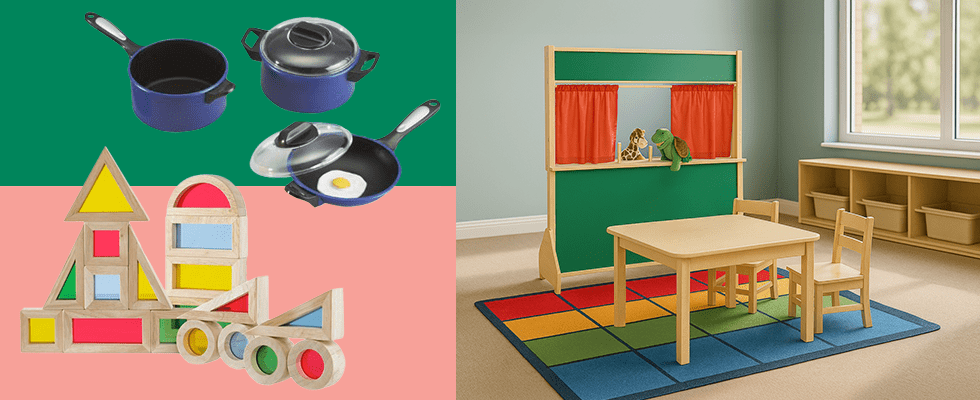
When most adults think of school, they usually think of formal instruction in things like math and reading. But educators like Erika Christakis think preschools should let children play more. The former professor at Yale Child Study Center makes the case that dramatic play is the best way for preschoolers to learn and grow. In this article, we’ll talk about the importance of dramatic play and show you ways you can bring more dramatic play into your preschool classroom.
What is dramatic play?
Dramatic play is a common and healthy behavior in which children imagine themselves in a different scenario, role, or reality. Also known as make-believe or pretending, dramatic play gives children a chance to create a make-believe world in which they can practice skills they’ll need as adults. Whether they’re pretending to cook dinner, care for a baby, visit the doctor, or blast off into space, children use dramatic play to explore and make sense of the world around them.
This type of play often includes roleplaying, storytelling, and the use of props or costumes to bring imaginary scenarios to life. It can be solitary, but it's often social, encouraging children to cooperate, negotiate, and communicate with peers. Through dramatic play, young learners build critical cognitive and emotional skills, including empathy, self-regulation, and flexible thinking.
In a classroom setting, a well-designed dramatic play area becomes a stage for all this development. It allows children to take on new identities, express their thoughts, and explore a variety of social roles in a safe, supportive environment. When thoughtfully furnished with age-appropriate items, like play kitchens, dress-up stations, and pretend storefronts, this area becomes a rich learning zone that bridges imagination and real-world preparation.
Playing pretend is important for preschool development
The formal instruction of children as we know it today is relatively new. For much of our evolutionary history, children learned through observing and imitating adults, in other words, dramatic play. Professor Bjorklund, Ph.D. of Florida University, says that direct instruction is an “evolutionary mismatch between young children’s evolved learning abilities and the demands of contemporary society.” Dr. Bjorklund even calls pretend play a “metaphoric multivitamin” for preschoolers. But why is dramatic play so beneficial to preschoolers?
Make-believe encourages creativity and self-expression
School furniture that inspires dramatic play sparks creativity and serves as an outlet for self-expression for preschoolers. Through make-believe play, preschoolers engage their imaginations to build a kingdom with building blocks or give voice to puppets. This kind of play also helps children explore different identities, feelings, and stories in a safe and joyful way.
Furniture ideas and benefits:
Puppet theaters and costume storage units to support role changes
Modular building blocks and play panels for creating imaginative scenes
Easels and dramatic play mirrors to encourage dress-up and identity play
Open-ended props like hats, capes, and reusable scenery panels
Dramatic play supports language and communication skills
Your preschool room is likely the first place where young children meet other kids with whom they have no other connection. They’ll learn important communication skills as they engage in dramatic play with other kiddos whose personalities and backgrounds differ from their own. These experiences also introduce them to vocabulary, storytelling, and turn-taking in real-world contexts. with whom they have no other connection.
Furniture ideas and benefits:
Play phones, menus, and cash registers to promote real-world conversations
Small tables and chairs for group storytelling and roleplay
Writing centers near play areas to support labeling and scripting
Puppet stages to help children narrate and act out dialogue
Imaginary play builds preschoolers’ muscle for emotional regulation
Dramatic play offers preschoolers the chance to express and learn about their emotions. The American Academy of Pediatrics routinely stresses the importance of play for young children, especially those exposed to toxic stress. According to researchers, play regulates the body’s stress response for these vulnerable young children. It also gives children a safe outlet to act out fears, frustrations, and joys while developing emotional resilience.
Furniture ideas and benefits:
Cozy corners with soft seating for safe emotional breaks
Dollhouses and stuffed animals for empathetic storytelling
Calm-down kits stored in labeled bins to support self-regulation
Mood charts or emotion puppets to help preschoolers express feelings
Dramatic play helps preschoolers understand the world of grown-ups
Dramatic play is how preschoolers figure out the often-confusing world of grown-ups. Mimicking the adults around them is one way preschoolers can foster a sense of autonomy. Through playacting, they take their first steps toward being independent adults. These roleplaying moments also introduce routines, responsibilities, and problem-solving in a way that’s accessible and fun.
Furniture ideas and benefits:
Child-sized kitchen sets, laundry centers, and tool benches
Play desks, phones, and doctor kits to explore adult roles
Open shelving for easy access to rotating real-life props
Pretend ATMs, mailboxes, or recycling centers to simulate daily tasks
Top dramatic play ideas for preschoolers
Children engage in many different types of dramatic play. There are some themes, however, that are more common. These common subjects of pretend play help children develop social and cognitive skills they’ll need as they grow older.
Home and family life
Home and family are at the center of preschoolers’ lives. They’re naturally drawn to playing make-believe as mommies and daddies with their own families. Preschoolers can shop for their families in a pretend grocery store. “Buying” healthy food for their pretend families will reinforce healthy eating habits. Preschoolers can then take their groceries home, where they’ll cook in their play kitchen while their babies play in high chairs. With classroom furniture that inspires playacting, young children learn about their parents’ responsibilities, like laundry.
Furniture ideas and inspiration:
Grocery shelves and play food bins for pretend shopping
Child-sized kitchen appliances and dining sets
Laundry play centers and baby care stations
Bedroom or nursery furniture sets with cribs, dressers, and rocking chairs
Community helpers
Being a responsible, hard-working citizen is a key component of adult life. Preschoolers can start to explore jobs and roles beyond the family. They’ll learn nurturing skills when they nurse sick dolls or cure a stuffed animal. Pretending to be a firefighter will help reinforce the important safety lessons they learned during Child Safety Week.
Furniture ideas and inspiration:
Doctor kits, exam tables, and vet centers
Firefighter dress-up sets with lockers and hoses
Mail centers, police desks, or bus driver setups
Construction worker gear with tool benches and safety cones
Travel and adventure
Most children are excited to go on vacation with their families. Through dramatic play, preschoolers can imagine an exciting camping trip in which they cook smores over the campfire right before going to sleep in a tent. What’s that noise? Oh no, it’s a bear! No, it’s only one of their friends pretending!
Furniture ideas and inspiration:
Indoor tents, sleeping bags, and faux campfires
Explorer kits with binoculars, maps, and backpacks
Rolling suitcases and "airport" roleplay stations
Camper vans or travel trailers with play steering wheels and gear
Food and restaurants
Ask most preschoolers, and they’ll say their favorite dinner is going out for pizza or ice cream. They’ll love pretending to have their very own pizzeria and ice cream shop. By taking and placing orders, they’ll learn about taking turns, math concepts, and how to say “please” and “thank you.”
Furniture ideas and inspiration:
Restaurant booths and order counters
Pizza ovens, menus, and play cash registers
Ice cream carts and bakery display shelves
Drive-thru windows or food trucks for outdoor-style setups
Fantasy and adventures
Imagining worlds completely different from their own builds preschoolers’ imagination and strengthens their problem-solving and decision-making skills. Being on a pirate ship or a spaceship allows children to play in ways they can’t in their everyday lives. They can fight monsters in a castle or aliens in space and become heroes.
Furniture ideas and inspiration:
Castle playhouses, pirate ships, or rocket modules
Costume racks with fantasy-themed outfits
Building blocks and props for creating story settings
Enchanted forest backdrops or underwater themes with soft floor mats
FAQs About dramatic play for preschoolers and classroom furnishings
What is a dramatic play area in a preschool classroom?
A dramatic play area is a dedicated space where children can engage in pretend or imaginative play. It’s often equipped with roleplay furniture, costumes, props, and themed setups, like a kitchen, doctor’s office, or grocery store that support storytelling and social development.
Why is dramatic play important in early childhood education?
Dramatic play supports emotional, social, cognitive, and language development. It allows preschoolers to explore emotions, practice communication, learn problem-solving, and build empathy, all through imaginative scenarios.
What are some must-have furniture pieces for a dramatic play center?
Some essentials include:
Child-sized play kitchen sets (oven, sink, fridge)
Dress-up closets or cubbies for costumes
Pretend food and cookware sets
Market stands, cash registers, or puppet theaters
Sturdy tables and chairs for restaurant or home themes
Storage units with labeled bins for organizing props
How much space do I need for a dramatic play area?
It depends on your classroom layout, but even a small corner can be transformed with a few key items. Ideally, you’ll want enough room for 3–5 children to play cooperatively without crowding, with clearly defined zones to minimize distraction from other classroom areas.
How do I keep dramatic play furniture safe and age-appropriate?
Choose furniture that’s designed specifically for early learners. Look for:
Rounded corners and smooth finishes
Non-toxic materials and easy-to-clean surfaces
Durable materials and quality construction that stand up to daily use
Furniture with appropriate height and scale for preschoolers
How often should I change or rotate dramatic play themes?
Rotate dramatic play themes every 3–4 weeks to keep students engaged. Follow seasonal events, curriculum units, or children’s interests. Changing props regularly sparks creativity and reinforces new vocabulary and skills.
Can dramatic play support academic learning too?
Yes! Dramatic play enhances literacy, math, and science skills. For example:
Menu writing and order-taking encourage reading and writing
Cash registers and play money introduce counting and math
Playing doctor introduces body parts and health vocabulary
Travel themes teach geography and cultural awareness
Where can I get help designing my dramatic play area?
At School Outfitters, we specialize in outfitting preschool and early learning spaces with furniture that sparks imagination and supports development. Our team can help you plan a functional, safe, and inspiring dramatic play area, complete with flexible layouts and easy storage solutions.
Tips for making the most out of dramatic play for preschoolers
Young children are born to play make-believe, quite literally. Dramatic play is a natural behavior that has helped children learn for millennia. Still, educators can and should facilitate learning through dramatic play by using these tips.
Keep preschoolers engaged by rotating pretend play props.
Keep things organized with storage bins and labels.
Encourage cooperation and inclusion.
Ask preschoolers open-ended questions about their make-believe world
Most importantly, let kids take the lead in dramatic play.
Dramatic play will make you feel like a kid again
As your preschoolers dole out ice cream, kill dragons, and perform life-saving surgery on Buttons the Bear, you might wish you could join them. You should! Most of us don’t eat hot fudge sundae with whipped cream every day for obvious reasons. But we can eat as many pretend ones as we want.
You can create a dramatic play area that kids and adults alike will love with School Outfitters. Get a free quote today. Or explore some of our favorite early learning room designs to inspire dramatic play and fun with your students.