




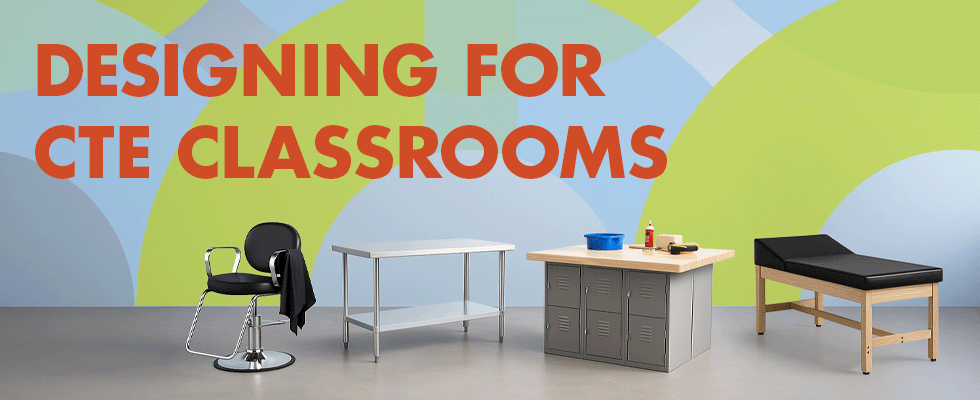
Career and Technical Education (CTE) is having a moment. And it’s long overdue. As schools face mounting pressure to prepare students for a rapidly evolving workforce, CTE programs are stepping up in a big way. From robotics to healthcare, skilled trades to digital marketing, today’s students need spaces that go beyond textbooks and lectures. What they need (and crave) are learning environments that simulate the real world.
And that’s where we come in.
Designing the right space for hands-on learning is no small feat. But when done right? It fuels student engagement, builds real-world confidence, and helps districts meet the growing demand for skilled professionals in high-need industries.
This Experience Positive CTE guide walks you through the key elements of designing effective CTE classrooms and labs. Whether you're upgrading an outdated shop room or building a brand-new career center from the ground up, we’ve got you covered.
Why CTE design matters more than ever
According to the latest data and Association for Career and Technical Education, students in CTE programs are more likely to graduate. They’re also more likely to pursue postsecondary education and land high-paying jobs. But to deliver high-quality CTE experiences for them now, we need high-quality environments. That means flexible layouts, up-to-date technology, and spaces that mirror actual workplaces, not just classroom versions of them.
Here are key takeaways to guide your planning:
Start early. What used to be reserved for high school is now branching into middle and even elementary grades.
Diversify career pathways. Go beyond traditional trades to include healthcare, IT, robotics, marketing, and other growing fields.
Design for engagement. When spaces are hands-on and industry-relevant, students show up more invested and ready to learn.
Plan for change. CTE needs evolve fast. Choose furniture and layouts that are modular and easy to reconfigure.
Partner with industry. Real-world input leads to real-world results. Work with local businesses to align your space with in-demand skills.
Make it feel professional. Students rise to the occasion when their environment reflects the standards of the workforce.
Support equity. Thoughtful design helps level the playing field, giving all students access to modern tools and career training.
Build for tech. Digital skills are essential. Your space should support devices, displays, and data infrastructure.
Incorporate soft skills. Create areas where students can collaborate, reflect, and grow their communication skills.
Think long-term. Great CTE design isn’t just for today’s students. It sets the foundation for tomorrow’s workforce.
Stick with us. We’ll show you how to outfit your CTE spaces brilliantly.
1. Core design principles for CTE learning spaces
Let’s start with the basics. No matter what pathway your CTE program focuses on, these design fundamentals should guide your layout and furnishing choices.
Functionality and flexibility
Hands-on learning requires agility. One day, it's group collaboration. The next, it's solo design work. Your layout can be flexible with:
Modular furniture that can be rearranged easily.
Mobile storage units to shift tools and supplies as needed.
Multi-use layouts that accommodate various teaching styles and project types.
Bonus tip: Invest in furniture that supports seated and standing positions. Your students will thank you.
Technology integration
Modern careers require modern tools. So, your CTE spaces should include:
Digital displays and smartboards for instruction and live demonstrations.
3D printers, CAD workstations, and robotics kits for STEM programs.
AR/VR stations for immersive simulations in everything from welding to health sciences.
Don’t forget the infrastructure: plan for ample power outlets, Wi-Fi strength, and data ports that can handle high-bandwidth demands.
Safety and compliance
CTE classrooms often come with heavy equipment, sharp tools, or complex machinery. It only makes sense that safety is a top priority. Here are some of the latest safety considerations to keep in mind as you outfit your new CTE spaces.
Ensure clear sightlines for supervision.
Use zoning to separate active and passive learning areas.
Follow OSHA guidelines, fire safety codes, and ADA compliance.
Choose durable, ergonomic furniture that supports different body types and reduces fatigue.
Industry relevance
The right furnishings can help students feel like they’re already part of the workforce. When a space looks and functions like a real job site, students take their training more seriously and feel more confident. Choose furniture and layouts that reflect actual work environments.
For example, you might explore creating commercial kitchens, medical exam rooms, or office-style workstations. Include areas where students from different programs can work together on projects, just like they would in the real world. And add mock workspaces where students can build soft skills like teamwork, communication, and problem-solving. The more real the space feels, the more future-ready your students become.
2. Designing spaces by CTE program area
Every CTE pathway has unique space requirements. Designing with the program in mind helps students build job-ready skills in environments that feel familiar and relevant. When the space reflects the work, students engage more, learn faster, and prepare better for their careers. Let’s break it down by some of the most popular programs.
Health sciences prepare students for medical careers
Health science classrooms need clinical beds, privacy curtains, and sanitation stations to mimic medical environments. Design with clinical precision in mind. Include:
Simulation labs with medical mannequins and patient beds.
Clinic-style setups to teach bedside manner and patient flow.
Sanitation stations and biohazard-safe disposal areas.
Need furniture inspiration? Check out these medical/clinical learning favorites:
Adjustable hospital beds with privacy curtains
Medical-grade storage carts and supply cabinets
Ergonomic stools for instructors and student nurses
Durable exam tables for simulation practice
Sink units with hands-free faucet options
Whiteboards and digital display panels for procedure review
STEM and robotics are the future
STEM and robotics programs work best with open maker spaces, coding stations, and room for prototyping. These are tech-heavy spaces, so think:
Maker labs with workbenches, soldering stations, and microcontrollers.
Robotics arenas with open floors and modular barriers for obstacle courses.
High-performance computer labs for coding and design software.
Need furniture inspiration? Check out these tech-lab favorites:
Adjustable-height workstations for coding, wiring, or building
3D printer tables with vibration-dampening design
Computer desks with cable management and power access
Rolling AV carts for mobile instruction
Tool storage walls with labeled bins and pegboards
Open floor space or arenas for robotics testing
Culinary arts, food service, and hospitality
Culinary arts labs need durable kitchen setups with commercial-grade appliances, prep tables, and ventilation. Think like a restaurant, with:
Commercial-grade kitchens (with easy-to-clean flooring and proper ventilation).
Prep stations and demo areas for instructor-led lessons.
Handwashing and sanitation zones to reinforce health standards.
Need furniture inspiration? Check out these commercial kitchen-like favorites:
Stainless steel prep tables and workstation islands
Demo stations with overhead mirrors or video monitors
Commercial-grade shelving for dry storage
Rolling carts for kitchen tools and ingredient transport
High stools or chairs for observation and instruction zones
Sanitation stations and mobile sink units
Beauty and cosmetology arts
Explore the wide world of beauty and cosmetology. Outfit your learning spaces to resemble today’s high-profile salons:
Dedicated zones for hair cutting, coloring, and skincare.
Rolling trolleys for tools, brushes, and sanitation supplies.
Ample lighting, both natural and artificial, for detailed work.
Need furniture inspiration? Here are salon-ready favorites:
Full-service styling chairs with adjustable height and easy-clean upholstery
Modular salon stations with mirrors and built-in storage
Mani-pedi chairs with ergonomic design for student and client comfort
Utility carts for mobile access to hairdryers, curling irons, and more
Stool seating for instructor demos and precision training
Wall-mounted cabinetry for clean, clutter-free storage of products and tools
Construction and skilled trades continue to thrive
Construction and trades programs require heavy-duty flooring, power tool storage, and defined safety zones. These spaces need to be tough and safe:
Concrete or rubberized floors to withstand heavy use.
Wall-mounted tool storage for easy access and safety.
Dedicated welding, electrical, or carpentry stations with protective barriers.
Need furniture inspiration? Check out these workshop favorites:
Heavy-duty workbenches with built-in tool storage
Welding tables with fire-resistant tops and ventilation support
Lockable storage cabinets for power tools and safety gear
Rolling tool chests for easy access during projects
Task stools or standing mats to support long work sessions
Partitions or safety dividers for equipment zones
Business, IT and marketing are industry agnostic
Business, marketing, and IT programs benefit from tech-enabled workstations, soft seating for collaboration, and areas to practice presentations. Here, collaboration and creativity are king:
Open-plan layouts with zones for pitching, designing, and planning.
Computer workstations with dual monitors for multitasking.
Soft seating areas for brainstorming and mock interviews.
Need furniture inspiration? Check out these office environment favorites:
Collaborative tables or conference-style seating areas
Mobile whiteboards or writable walls for brainstorming
Sit-to-stand desks with space for dual monitors
Soft seating like lounge chairs for group projects
Digital signage for mock presentations or pitches
Lockable charging carts for laptops and tablets
3. CTE Classroom layout tips
There’s a science and an art to laying out CTE spaces. These aren’t one-size-fits-all environments. Instead, each program has unique spatial needs based on equipment, student interaction, and teaching styles.
Consider first identifying how the space will be used daily: Will students rotate through workstations? Do projects require collaborative zones? Will large equipment need clearances or designated safety buffers?
From there, you can prioritize visibility for instructors to supervise hands-on work and ensure there’s enough room for smooth traffic flow between stations.
Don’t forget storage. Well-placed CTE classroom storage is critical to reduce clutter and keep tools and materials easily accessible without eating into instructional space. Whether you're designing a welding lab, a computer-driven CAD room, or a culinary arts kitchen, the layout should support student movement, engagement, and safety without sacrificing flexibility for future curriculum changes.
Keep these tips in mind:
Blend instructional and hands-on zones. Position whiteboards or displays near workstations so students don’t have to toggle back and forth.
Plan for traffic flow. Ensure clear walkways between stations, especially in high-movement programs like culinary or robotics.
Build in visibility. Teachers need to supervise from anywhere in the room. Low-profile furniture and glass partitions help.
Incorporate storage early. Use under-table shelving, mobile carts, and wall systems to keep tools and materials organized but accessible.
4. Planning, budgeting, and funding best practices
We get it. Outfitting a new CTE space (or several) isn’t cheap. But with a smart approach, it’s entirely doable. We can help.
Budgeting tips
Prioritize must-haves vs. nice-to-haves.
Plan for growth, both in enrollment and in evolving tech needs.
Get detailed estimates early for equipment, furnishings, and infrastructure.
Tap into funding resources
There’s money out there. You just have to know where to look for contracts, co-ops, and opportunities:
Perkins V grants: Federal funding designated specifically for strengthening CTE programs.
State and local grants: Many state departments of education offer targeted grants for workforce readiness programs.
Community partnerships: Partner with local businesses or workforce boards to sponsor lab spaces, equipment, or mentorship programs.
Pro tip: Work with CTE furnishings experts
From choosing furniture to writing grant proposals, design consultants (like us!) can streamline the process. We’ve helped schools of all sizes create future-ready CTE environments. And we’re here to help you, too, with unconventional classroom furniture and products that outfit your unique spaces with hands-on learning opportunities your students will love.
5. Trends shaping the future of CTE spaces
CTE design isn’t standing still. It continues to evolve alongside the industries it prepares students to enter. Modern learning environments in K-12 schools should be flexible, inclusive, and equipped to handle emerging technologies and instructional models ongoing.
And with the right classroom design and school furniture partners, districts are doing big things in breakthrough CTE learning.
Schools are reimagining traditional classrooms to support blended learning, promote collaboration, and reflect real-world work settings. From sustainable design features to integrated digital tools, the focus is shifting toward spaces that actively support both technical skills and soft skill development. And as workforce demands change, forward-thinking designs you adopt today ensure that students are learning in environments that mirror the pace of modern tomorrow-careers.
Here’s what’s trending now and what’s next:
Hybrid and blended learning
More and more CTE programs are integrating virtual components. Whether students are tuning in remotely, reviewing recorded demos, or navigating software-based simulations, CTE spaces need to support flexible instruction formats. Classrooms designed for hybrid learning help teachers deliver more personalized, tech-enabled lessons while giving students greater autonomy and exposure to the digital tools they’ll use in the real world. To support this hybrid learning shift, consider:
Flexible camera setups for live-streamed lessons.
On-demand training modules built into classroom tech.
Multi-device stations where students can switch between hands-on and digital tasks seamlessly.
Sustainability and green design
Designing CTE spaces with green principles not only helps reduce environmental impact but also gives students firsthand experience with sustainable materials and systems. It’s a skillset and knowledge bank that students of today should have to better prepare them for the jobs of tomorrow. Students entering industries like architecture, environmental science, and construction benefit from:
Energy-efficient lighting and HVAC systems.
Sustainable materials like recycled desktops or low-VOC finishes.
Onsite green features like solar panels or indoor gardens that double as learning tools.
SEL and soft skills integration
Today’s employers want well-rounded team players just as much as they want technical skills and hands-on experience. That’s why modern CTE spaces are starting to reflect a more holistic approach to career readiness by supporting Social and Emotional Learning (SEL). Thoughtful design can encourage teamwork, build self-awareness, and help students strengthen the interpersonal skills they’ll need to thrive in any industry. SEL-friendly layouts include:
Collaboration zones with flexible seating.
Project planning walls or digital dashboards to encourage teamwork.
Quiet zones for reflection and self-regulation, important for developing emotional intelligence alongside career skills.
6. Ready to build the CTE classroom of tomorrow?
Future-ready CTE spaces don’t happen by accident. They’re the result of intentional planning, smart investments, and a deep understanding of what students need to succeed in today’s workforce.
As school furnishing experts with years of experience in CTE program design, we’re here to support your goals every step of the way, from space planning and layout to selecting the right furnishings, safety equipment, and instructional tools.
Whether you’re revamping one classroom or designing a full CTE wing, we’re ready to help you build the hands-on, high-tech, real-world-ready environments that today’s learners and tomorrow’s professionals deserve.
Let’s design the future together. Start browsing our extensive CTE furniture products and get a free quote to get started.