




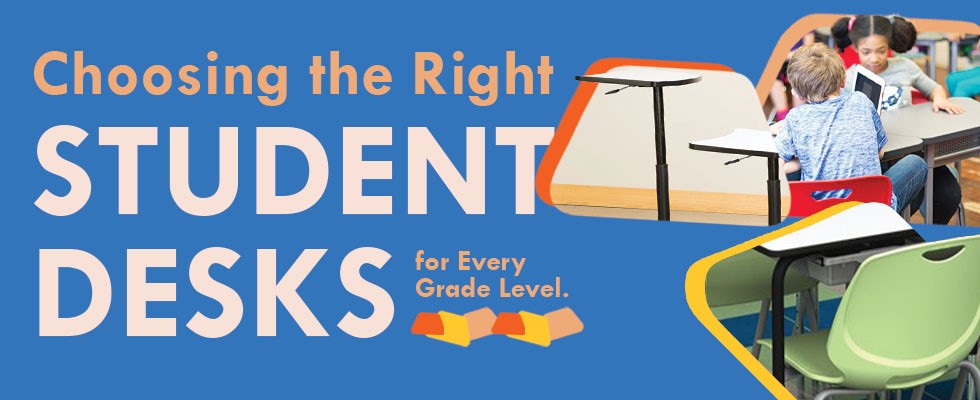
Creating a learning space that feels comfortable, functional, and inspiring starts with something simple... student desks. They're the heartbeat (and MVP) of every classroom, the spot where focus meets creativity, and where learning takes physical shape. The right desk setup helps students stay on task, feel supported, and work together with ease.
As students grow, their physical and academic needs change. The desks that serve them well in kindergarten will not be the same ones that help them thrive in middle or high school. Choosing the right classroom desks means considering ergonomics, durability, flexibility, and how each piece fits the rhythm of a typical day.
This guide explores what schools should look for at every grade level and how to choose desks for different grade levels with long-term value in mind. For detailed comparisons and sizing charts, visit our School Desks Buying Guide.
Elementary school: Simple, durable, and easy to clean
At the elementary level, desks need to do a little of everything. They hold crayons, books, and half-finished art projects, while also providing a sense of personal space. The best student desks for these grades are sturdy, easy to clean, and designed for small hands and big imaginations.
What works best
Open-front desks with storage allow students to keep their materials close at hand. These make it easy for young learners to stay organized without constant reminders. Teachers appreciate them because less time is spent searching for missing supplies, and more time can go toward instruction.
For classrooms that emphasize collaboration, double student desks or student desk and chair sets are smart options. They encourage social interaction while saving space. Younger students naturally learn through play and conversation, and sitting side by side supports those moments of shared curiosity.
Because children grow quickly, adjustable student desks are a wise investment. They can be raised or lowered as students progress through grades, eliminating the need for frequent replacements. Schools that purchase adjustable desks early often find they can keep them in use for years without additional cost.
The visual environment matters too. Bright, cheerful finishes and rounded edges make classrooms feel inviting and safe. Surfaces should resist glue, marker, and spills. Durability is essential for furniture that sees daily wear and tear.
When every desk in the room feels sized just right, students are more confident and focused. That comfort carries into their learning.
Tip: Pair your desks with matching cubbies or storage from Learniture® and Sprogs® to create cohesive, organized layouts that grow with your students. |
Middle school: Transitional designs for collaboration and growth
Middle school is a time of change. Students start to take more ownership of their work while still benefiting from structure. Their desks should reflect that transition, balancing independence with opportunities for group learning.
Collaborative student desks and trapezoid student desks are especially effective at this level. Their shapes allow teachers to arrange the classroom in flexible configurations, from traditional rows to small group pods. Desks that easily move between individual and team-based layouts keep lessons dynamic.
Height flexibility becomes even more important during these years. Growth spurts can make last semester’s setup uncomfortable in a matter of months. Adjustable student desks help each student find the right fit, supporting posture, and reducing distractions.
Mobility makes all the difference in engagement. Middle school classrooms often host multiple subjects or teachers throughout the day. Lightweight desks with locking casters allow for quick transitions between lessons. Teachers can shift from lecture mode to science lab setups without wasting precious time.
Durable, modern materials are a must. Look for thick laminate tops, steel legs, and ergonomic edges that resist chipping. Modern student desks designed with smooth corners, neutral tones, and easy-clean surfaces create an atmosphere that feels both mature and welcoming.
This is also the stage where students begin using technology more frequently. Tablets, Chromebooks, and small laptops are common tools. Desks with built-in cable management or wider surfaces give them space to balance notebooks and screens comfortably.
Tip: Investing in mobile, modular school furniture at the middle school level creates long-term value. It allows districts to adapt quickly when teaching models or room assignments shift. |
High school: Modern, ergonomic, and tech-ready
By high school, students spend long stretches at their desks every day. Comfort, durability, and design become even more important. Desks that support proper posture help students stay focused through longer classes and prevent fatigue during extended writing or test sessions.
Ergonomic student desks are ideal for this stage. Choose models with contoured surfaces that support the wrists and forearms. Ample knee clearance and comfortable legroom are equally important. Students should have enough space to move without bumping into table legs or storage compartments.
Technology is part of nearly every subject now. Modern student desks with built-in wire ports, modesty panels, or laptop shelves make classrooms more efficient. Pairing these with stackable or rolling chairs allows for smooth transitions between independent study and group work.
Shape can influence engagement. Trapezoid desks and modular configurations make it easy to form circles, semi-circles, or U-shaped setups that invite discussion. Collaboration is easier when students can see and face one another.
At this level, sustainability is also important. Look for GREENGUARD Gold certified options to ensure healthy indoor air quality as well as compliance with environmental standards. A durable steel frame with high-pressure laminate offers the best combination of strength and cleanability.
Students notice quality. When they sit at sturdy, comfortable school desks, they treat the space with more respect. Well-designed classrooms create a professional atmosphere that helps students feel valued and capable.
Tip: Choose styles that can double as lab or project tables. Multi-purpose furniture stretches budgets and supports modern, hands-on learning. |
Multi-use classrooms: Desks that flex with every schedule
Some spaces never stay the same for long. Makerspaces, media labs, and shared classrooms need furniture that keeps up with constant change.
Adjustable student desks or nesting desks are the go-to choices for multi-use environments. They can be folded, stacked, or rolled to clear space for activities or group sessions. When the schedule calls for testing or small group work, they unfold and reconnect in minutes.
Durable materials make a big difference in shared classrooms. Laminate or composite tops resist scratches and spills, and powder-coated frames hold up through years of rearranging. In rooms with mixed age groups, height-adjustable options ensure everyone sits at a comfortable level.
Double student desks are also useful for flexible setups. They save space while promoting teamwork. When paired with lightweight chairs, they move easily between lesson styles.
Schools that invest in flexible furniture often discover new ways to use their space. A single classroom can serve as a math lab in the morning, a reading circle after lunch, and a robotics workshop by afternoon. That versatility keeps budgets practical while making every square foot count.
Tip: When planning multi-use areas, choose furniture with locking casters. It gives teachers the freedom to rearrange layouts safely and efficiently without waiting for maintenance staff. |
How to choose desks for different grade levels
Buying desks for classrooms is more than just matching style and color. The process involves thinking ahead, considering student needs, and balancing cost with long-term performance.
Here are the most important factors to weigh when selecting new school desks:
1. Student age and height range
Desk height directly affects posture and focus. Students should be able to rest their feet flat on the floor and keep their elbows at a natural angle. Adjustable student desks give schools flexibility when class rosters change or students grow midyear.
2. Storage needs
Younger students benefit from under-desk compartments or book boxes. As students get older, they rely less on personal storage and more on shared organizational systems. Minimalist surfaces also reduce clutter and make cleaning easier.
3. Frequency of rearranging layouts
If teachers regularly change room configurations, collaborative student desks or trapezoid student desks will make transitions faster. Lightweight, mobile designs are especially helpful in rooms used by multiple teachers.
4. Durability and safety
Furniture should meet BIFMA Compliant standards for stability and GREENGUARD Gold for air quality. Desks built with high-pressure laminates, metal legs, and secure glides can withstand years of daily use. Investing in quality now prevents replacements later.
5. Classroom size and shape
Smaller classrooms often benefit from modular designs that fit together neatly. In larger rooms, rectangular or double desks can maximize space while leaving room for circulation.
6. Long-term adaptability
Schools change over time. Budgets shift, grade levels move, and new teaching methods emerge. Modular and adjustable classroom desks give schools the ability to evolve without major purchases every few years.
7. Compatibility with chairs
Desks and chairs should work together to create a balanced seating posture. A mismatched height ratio can cause discomfort and impact focus. Many schools prefer ordering student desk and chair sets to ensure a perfect fit.
For more layout inspiration, browse our classroom design tools or reach out to our team for custom space planning support.
Helpful student desk FAQs
What’s the difference between adjustable and fixed desks?
Adjustable desks can be modified to different student heights, making them suitable for various grade levels or shared rooms. Fixed desks remain at a single height, which works well for classrooms where all students are similar in size.
Are double or collaborative desks better for small classrooms?
Both have strengths. Double student desks maximize floor space while supporting partner activities. Collaborative student desks, such as trapezoid or curved shapes, allow for more versatile group configurations. The right choice depends on your teaching style and room dimensions.
Do desks come assembled?
Most school desks arrive partially assembled with simple set-up instructions. Some compact models ship fully assembled for convenience. Schools often choose ready-to-assemble options to save on shipping and storage space.
What’s the most durable surface for student desks?
High-pressure laminate is the top performer for longevity and resistance to wear. Melamine or thermofused laminates are also strong choices for elementary and middle school classrooms, offering easy cleaning at a lower cost.
How can schools choose desks for multiple grade levels in one space?
Go with adjustable student desks that fit a range of heights. Pair them with ergonomic chairs and mobile storage. Modular, flexible designs make it simple to adapt to rooms between age groups or lesson types.
Which desk shapes are best for collaboration?
Trapezoid, kidney, and hexagonal desks encourage face-to-face interaction and easy sharing of materials. They are particularly effective for project-based learning and STEAM activities.
Why schools trust School Outfitters for student desks
When classrooms get the right foundation, everything else flows a little easier. The right student desks do more than fill a room. They shape how learning happens inside it. From pre-K reading corners to high school labs, every detail matters: comfort, durability, and flexibility that keep pace with change.
At School Outfitters, we have decades of experience helping schools design spaces that work as hard as their teachers do. We understand how each grade level has unique needs and how thoughtful classroom furniture can transform an ordinary room into a place students love to learn.
Our team helps schools choose furniture that balances performance and personality. Whether you need collaborative student desks that foster teamwork, adjustable student desks that grow with students, or modern student desks designed for technology, we guide you through every step.
Each product is carefully selected for quality, safety, and long-term value. We also provide layout consultations and expert advice to make sure your investment supports both your current and future needs.
Explore durable, ergonomic student desks built for every grade.
Or talk to a School Outfitters furniture expert today to find the right desks for your classrooms.