





There’s a special kind of hush right before the doors open on science fair day. Students stand beside their projects, fidgeting with display boards and checking wires one last time. Judges wait with clipboards. Parents hover with cameras. Then, like a light switch, the room fills with chatter, laughter, and that unmistakable buzz of curiosity that only hands-on learning can create.
That moment is why science fairs still matter.
When planned well, a school science fair builds more than just experiments. It cultivates teamwork, resilience, and the thrill of discovery. Students learn to test ideas, solve problems, and explain their thinking out loud. For teachers and administrators, it’s a chance to celebrate creativity and bring the entire school community together.
This guide walks you through how to plan a science fair that’s both inspiring and manageable, from setting the timeline to outfitting your space with the right presentation tables and display boards.
Step 1: Set a theme and timeline
A theme gives shape to the fair. It helps narrow ideas and keeps the event cohesive. You might choose STEM innovation, sustainability, or everyday science in action. A good theme connects to your curriculum and sparks excitement for both students and families.
Start planning six to eight weeks ahead. That timeline allows students to brainstorm, test, record results, and refine presentations without last-minute stress. Teachers can build mini-checkpoints along the way, with proposal due dates, experiment check-ins, and draft presentations.
If your school runs multiple events, use a shared calendar to coordinate with the art show or book fair. And consider creating a digital planning checklist that tracks responsibilities for teachers, students, and volunteers.
Pro tip: A themed fair doesn’t need to be complicated. Even “Science Solves Problems” or “Wonder in Our World” can anchor your event beautifully.
Download our science fair planning checklist or explore related classroom layout resources in our common area furniture room designs.
Step 2: Choose the right space and setup
The layout of your fair sets the tone for the entire experience. You’ll need room for students, judges, and visitors to move comfortably, with wide walkways between tables and clear access to outlets for experiments requiring power.
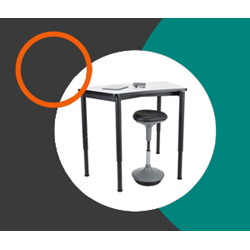
If your gym or cafeteria doubles as the exhibit hall, plan for mobile presentation tables that are easy to move, level, and wipe clean. Adjustable-height options let younger students display at eye level while giving older students space for tall models or tech setups. Adjustable-height tables for student showcases keep presentations accessible for all grade levels.
For displaying projects, sturdy student project display boards or classroom easels work wonders. They create a professional look and help organize space visually. Adding durable display panels for schools allows multiple projects to share space without clutter.
Include one or two portable podiums for presentations near the entrance or stage area. They’re perfect for opening remarks, student speakers, or award announcements.
Lighting also matters. Use bright, even light that highlights each project equally to avoid dark corners or glare near windows.
Step 3: Organize projects by grade level
Grouping projects thoughtfully helps judges and visitors make sense of what they see. It also gives students a sense of belonging within their grade’s section.
For elementary school science fair ideas, keep experiments simple and visual. Think baking-soda volcanoes, magnet mazes, or plant growth comparisons. Younger students love projects that involve color, motion, or easy-to-observe results.
For middle school science fair ideas, encourage more independent experiments and data collection. Allow students to explore cause-and-effect questions like how soil pH affects seed growth or how light intensity changes battery life in solar toys. Middle grades are ideal for introducing teamwork and collaboration.
Label tables or sections clearly using color-coded signs: green for environmental science, blue for physics, red for chemistry, and yellow for life science. If possible, post short blurbs describing what judges look for at each level so families understand expectations.
Step 4: Equip students for success
Even the best projects fall flat without the right setup. A clear, stable display makes all the difference in helping students feel confident and organized. Stock up on student project display boards for visuals, graphs, and summaries. Encourage students to practice explaining their projects while standing beside them. Public speaking is part of the learning experience.
For group experiments or large demonstrations, use collaborative learning furniture such as round tables or flexible seating that supports teamwork. You’ll find plenty of adaptable designs in our presentation tables collection. For portability, pair mobile tables with locking casters so displays can be arranged quickly and moved as needed. Lightweight easels make great supports for posters or models.
Did you know? Research from the Buck Institute for Education shows that students engaged in project-based learning score up to 20% higher on problem-solving tasks than peers in traditional lessons. Science fairs in schools are one of the most effective ways to give that learning real-world meaning.
For additional durability and safety, check that your furniture meets BIFMA and GREENGUARD Gold standards.
Step 5: Make it engaging for families and the community
A science fair should feel like a celebration, not an assignment. The more you involve families and the community, the more energy fills the room. Invite local STEM professionals (maybe engineers, environmental experts, nurses, or robotics club mentors) to serve as guest judges. Their real-world insight encourages students to think beyond the classroom.
Add fun recognition categories such as “People’s Choice,” “Future Scientist,” or “Most Unexpected Result.” A small ribbon or certificate goes a long way. Set up a student speaker panel using portable podiums for presentations. Older students can answer audience questions or share reflections on what they learned. Families love hearing students speak confidently about their work.
Consider adding a digital or interactive corner with a QR code linking to experiment videos or slideshows. It gives students a modern twist and keeps visitors exploring. If your school has cafeteria space nearby, tie in a light refreshment area. Cafeteria furniture room designs help you create inviting areas for families to mingle between exhibits.
Step 6: Keep safety and organization top of mind
Nothing derails a good science fair faster than tripping hazards or missing extension cords. A little preparation keeps everyone focused on learning instead of logistics.
Create a quick event-day checklist:
Keep walkways clear of cords and clutter.
Use only fire-safe materials for displays.
Provide power strips with surge protection for experiments needing electricity.
Label all projects clearly with student names and grade levels.
Have a few volunteers available for setup, tech help, and cleanup.
If possible, review each project a few days before the fair to ensure materials are safe and displays are sturdy. Offer students replacement boards or reinforcement tape if theirs start to sag.
Highlight your school’s commitment to safety during setup. School Outfitters’ furniture is built for heavy daily use, with safety certifications like BIFMA and GREENGUARD Gold. It's an important reassurance when dozens of young scientists are working in close quarters.
Step 7: Celebrate and reflect
When the judging ends and the room quiets down, take time to acknowledge every participant. A few kind words from a teacher or principal make the effort feel worthwhile. Hand out certificates or ribbons for creativity, teamwork, and research excellence. These categories honor diverse strengths beyond “first place.”
After the fair, create a hallway or lobby display board showing photos of standout projects. Students light up seeing their work featured, and it motivates next year’s participants. Encourage teachers to gather short reflections from students, like what they learned, what surprised them, or what they’d do differently next time. Those insights help improve next year’s planning and deepen student growth.
Consider hosting a brief debrief meeting for staff and volunteers to note what worked well and what could be streamlined. It keeps the tradition sustainable year after year.
Helpful science fair planning FAQs
How early should you start planning a school science fair?
Most schools begin planning six to eight weeks ahead. This gives students time for research, experimentation, and presentation prep, and gives staff plenty of runway for logistics and space setup.
How can teachers make a science fair engaging for students and families?
Mix in interactive elements, with live demonstrations, student panels, and “People’s Choice” awards. Encourage cross-grade mentoring where older students guide younger ones. Invite families to vote or leave positive feedback cards to make the event feel inclusive.
What are the top 10 science fair projects?
The best projects are those that answer authentic questions. Examples include:
How music affects plant growth
The power of natural cleaning agents
Solar ovens and renewable energy
The science of slime viscosity
Water filtration with everyday materials
Battery life experiments with temperature
Investigating soil erosion
Magnetic levitation demos
Comparing composting methods
The best materials for heat insulation
Each of these can be scaled up or down depending on grade level.
How to organize a school science fair efficiently?
Divide tasks among teams: logistics, judging, promotion, and student support. Use a shared spreadsheet to track entries and supplies. Rely on mobile furniture and labeled sections to make setup fast and teardown painless.
How to make your science fair engaging for students and families?
Invite parents to volunteer as greeters or photographers, set up interactive exhibits, and share highlights on the school’s social channels. Science is contagious when students see adults get excited, too.
Create your next fair with School Outfitters
A successful science fair blends creativity, structure, and the right environment. With thoughtful planning and durable classroom furniture, you can create a showcase that makes students proud and brings families together.
Outfit your next event with:
Mobile presentation tables that make setup simple.
Durable display panels that elevate student work.
Portable podiums for confident speakers and judges.
Adjustable-height tables for accessible viewing at every grade.
Need help planning the layout or choosing the right furniture for your next showcase? Talk to a School Outfitters expert to design a setup that fits your space and supports every young scientist’s big ideas.